
The Rice Pot, and the Clock That Starts When the Lid Comes Off
A big pot of rice or grains on Sunday is the most useful thing in a weeknight kitchen, and the one leftover people handle most carelessly. Notes on cooling, storing, freezing and reheating cooked grains so the batch lasts the week and stays safe.
meal prepkitchen notesfood safetyweeknight dinners
There is a pot in this kitchen that does more work than any other, and it is not the good one. It is the wide, dented stockpot that comes out on Sunday afternoon for rice, or farro, or a mix of whatever grains are in the jars, and it decides how the rest of the week goes. Rice under a stir-fry on Monday. Grain bowls in Tuesday’s lunchboxes. Fried rice on Thursday, when the fridge needs emptying and nobody has the energy for a recipe.
A batch of cooked grains is one of the best meal-prep habits a busy family can have. It is also the leftover that gets the least respect. People who would never leave a roast chicken on the counter overnight will let a pot of rice sit with the lid on until bedtime, then scrape it into a tub and keep eating it for a week. That is the part worth changing, and it is a small change.
Why rice gets its own rules
Most leftovers follow the same general advice: refrigerate within two hours, eat within three to four days, reheat until hot. Cooked rice and other starchy grains deserve a little more care because of one bacterium in particular.
Bacillus cereus lives in soil and dust, so it is commonly present on raw rice and grains. It forms spores, and those spores can survive boiling. Cooking kills the active bacteria but not the spores. When cooked rice then sits warm — the long, slow cool-down in a covered pot is the classic case — the spores germinate and multiply. Some strains produce a toxin that causes vomiting within hours, and that toxin is not destroyed by reheating. The FDA’s Bad Bug Book describes exactly this pattern, with fried rice made from rice left at room temperature as the textbook example.
The illness is usually short. It is also completely avoidable, and the fix is not about the reheating at the end. It is about the first hour after the rice comes off the heat.
The first hour: cool it fast
The USDA’s rule for all perishable food is that it should not sit between 40°F and 140°F for more than two hours, and no more than one hour if the room is above 90°F. That window includes the time food spends cooling. A deep pot of rice holds its heat for a long time; covered, the middle can stay warm for hours. So the job is to get the rice out of the pot and spread out.
What works here:
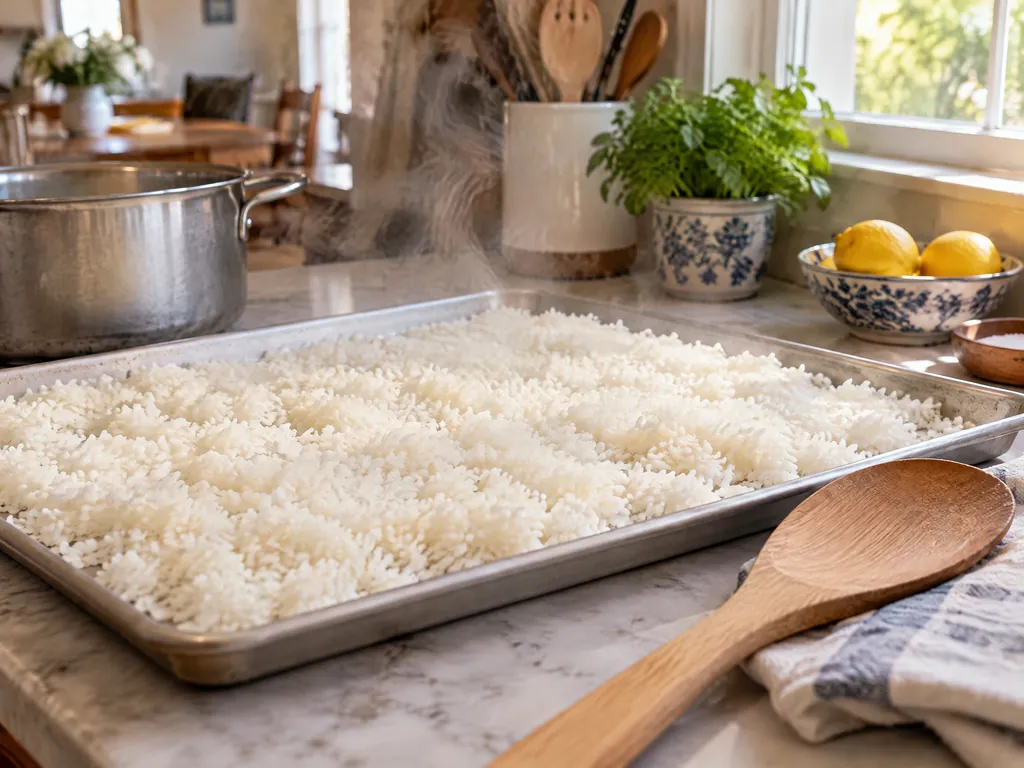
- Spread it thin. Tip the rice onto a rimmed sheet tray in a layer no deeper than an inch or so. It stops steaming within minutes and reaches room temperature fast. This is the single biggest improvement over cooling it in the pot.
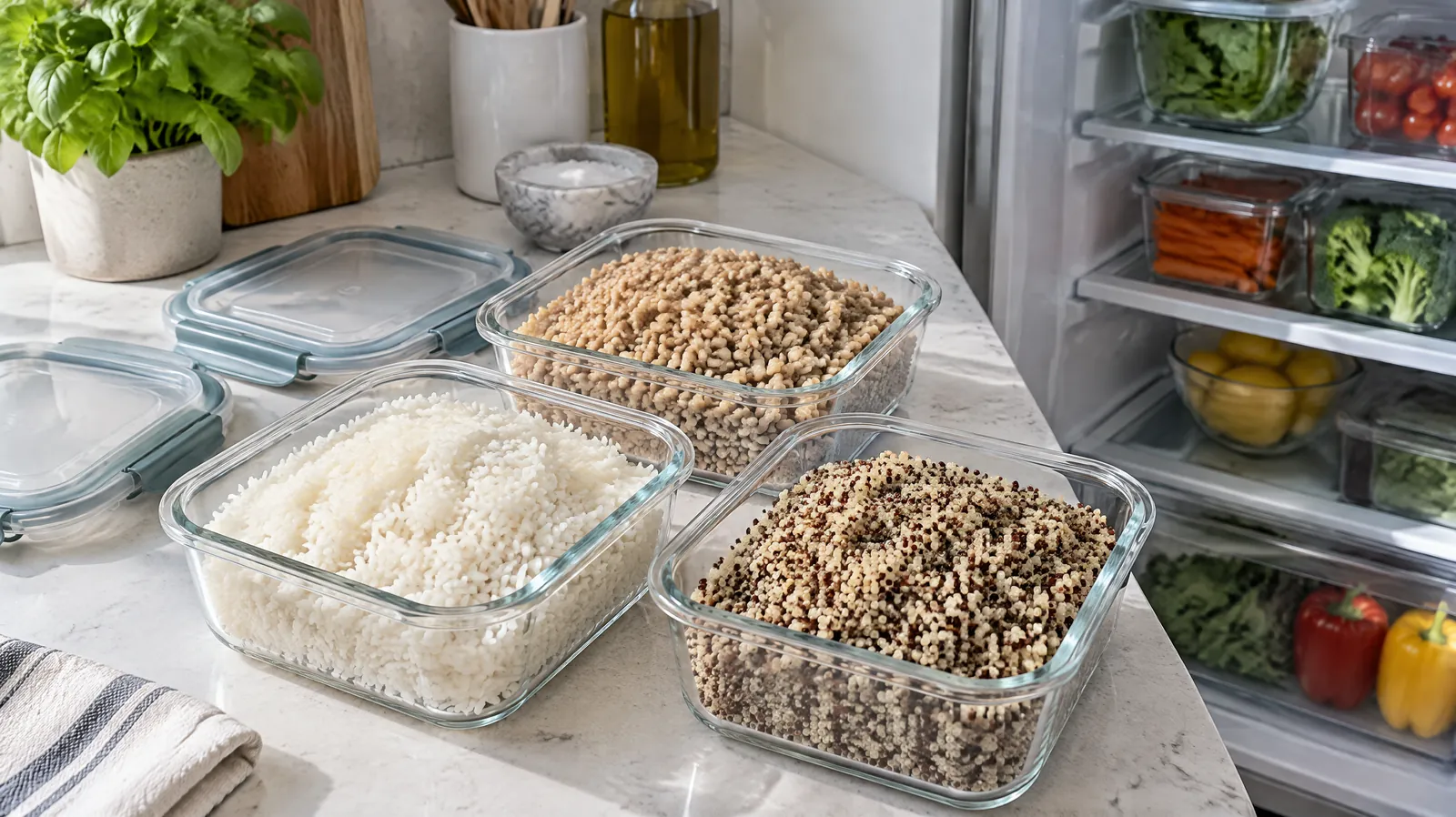
- Then go shallow. Once the steam is gone, move it into shallow containers rather than one deep tub. The USDA specifically recommends shallow containers for leftovers so the cold can reach the middle.
- Don’t wait for it to be cold. Warm food can go straight into the fridge. The old idea that hot food will spoil the fridge is outdated; a modern fridge copes, as long as you don’t pack it so tightly that air can’t move around, which the FDA warns about.
- Leave the lids off until it’s cool, then cover. Trapped steam slows cooling and makes the rice wet.
An instant-read thermometer earns its place here too: the fridge itself should read 40°F or below, and the FDA’s advice is to check it with an appliance thermometer rather than trust the dial.
How long the batch keeps
The general USDA guidance for cooked leftovers is to use them within three to four days in the refrigerator, and cooked rice and grains fall under it. The FoodKeeper app from the USDA lets you look up individual items and set reminders, which is useful for a household where five people open the fridge and nobody remembers what day the rice was made.
The practical version in this house:
- Label the container with the day it was cooked. A strip of masking tape and a marker. It sounds fussy and saves a lot of guessing.
- Plan the batch for three days of use, not seven. A Sunday pot covers Monday to Wednesday. Anything left by Wednesday night either gets eaten, turned into Thursday’s fried rice, or goes in the freezer — it does not drift into the weekend.
- Smell and look are not a safety test. The bacteria that make rice dangerous don’t necessarily make it smell off. Go by the date.
The fridge is the bottleneck in most weeknight kitchens anyway, and a batch of grains in flat containers stacks far better than the original pot.
The freezer is the better place for most of it
If the honest answer is that a family of four will not eat a whole pot of rice in three days, freeze it on day one rather than day three. Frozen at 0°F, food stays safe indefinitely according to the USDA, because bacteria can’t grow; what declines over time is texture. Cooked rice and grains freeze better than almost any other leftover.
The method that works:
- Cool the rice on the tray first, as above.
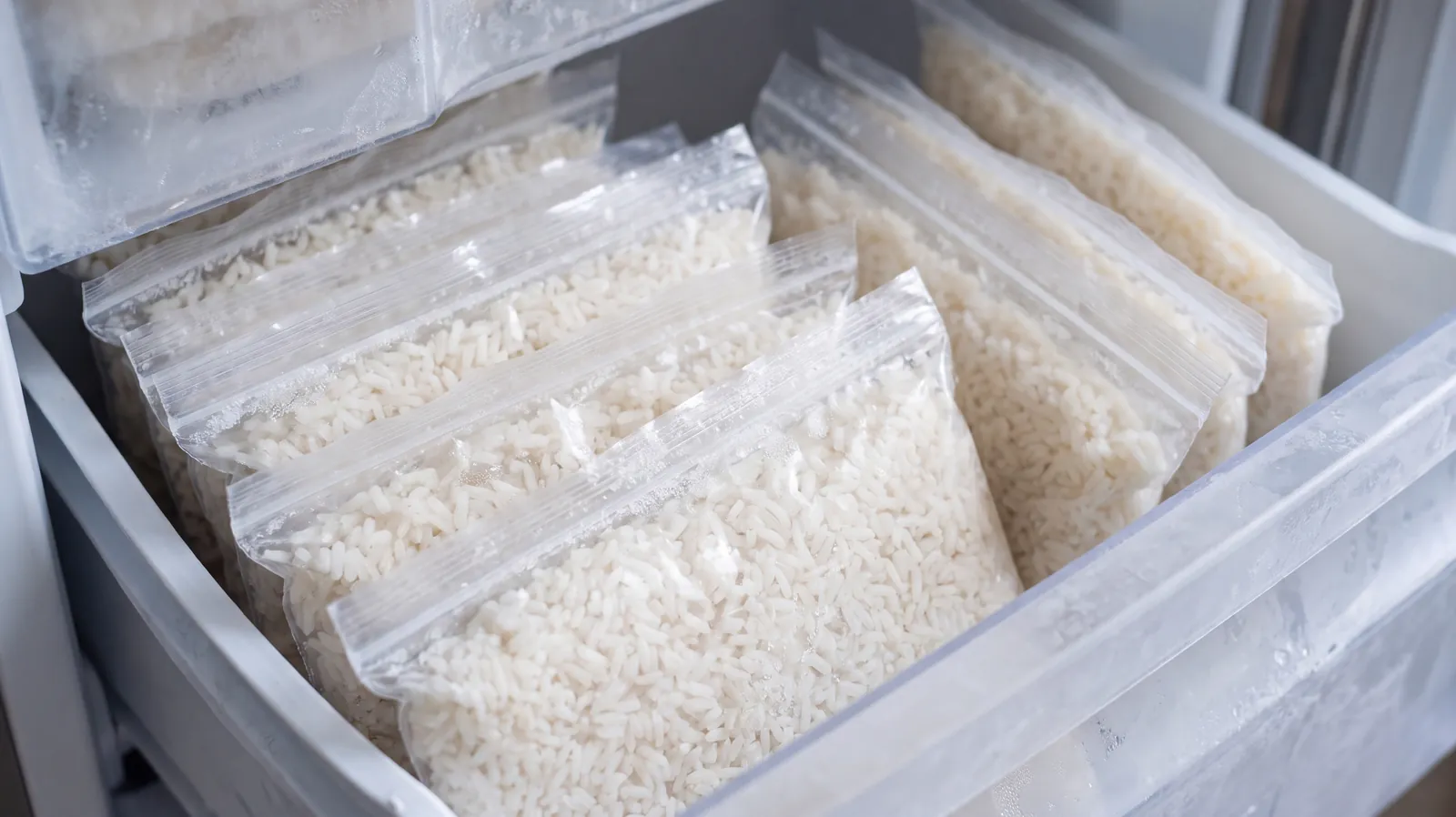
- Portion it into freezer bags in the amount you actually use — a cup or two per bag.
- Press each bag flat, squeeze the air out, label it, and freeze flat on a tray. Once frozen, the bags stand up in the freezer like files.
- Use within a couple of months for the best texture.
Flat bags thaw in minutes. Most nights they go straight into a pan or the microwave from frozen with a splash of water, no thawing step at all. Our notes on emptying the freezer before you fill it are about exactly this kind of stack — things you can see and use, not a frozen geology project.
Reheating: hot all the way through, and once
The USDA’s reheating standard for leftovers is 165°F, checked with a food thermometer. For rice that means steaming hot right through, not warm on top and cool in the middle. The microwave is fine; add a spoon of water, cover loosely, stir halfway, and give it a minute’s rest so the heat evens out.
Two habits help:
- Reheat only what you’ll eat. Take a portion out of the container rather than heating the whole tub and putting it back. Each trip through warm and cold gives bacteria more time.
- Don’t rely on reheating to make old rice safe. Heat kills bacteria, but the vomiting toxin from B. cereus survives it. That is why the cooling step at the start matters more than the reheating at the end.
Other grains, same rules
Everything above applies to brown rice, quinoa, farro, barley, bulgur and pasta: they are cooked starches, they can carry spores, and they need the same fast cooling and three-to-four-day window. Some practical notes from making them in batches:
- Brown rice and farro hold their texture best through freezing and reheating; they are good choices for lunchboxes.
- Quinoa is small and cools fastest; it goes from pot to fridge almost immediately when spread out.
- Pasta freezes less well than grains but is fine for three days in the fridge, tossed in a little oil so it doesn’t clump.
- Mixed batches work: a pot of half brown rice and half farro gives two textures for the same effort.
The same logic runs through our notes on a pot of beans: the base is not a recipe, it is a set of choices you get to make later in the week — as long as it is stored in a way that keeps those choices safe.
What the batch turns into
A Sunday pot is only useful if the week has places to put it. The rotation in this house looks roughly like this:
- Monday: plain rice under whatever the main dish is — the night it’s freshest.
- Tuesday: grain bowls for lunch. Rice or farro, a protein, a roasted vegetable, a dressing, packed in the morning straight from the fridge.
- Wednesday: soup night. A cup of grains stirred into the pot in the last few minutes makes a broth into a meal.
- Thursday: fried rice. Day-old rice fries better than fresh because it is drier, which is the one time the age of the rice works in your favour. Frozen peas and carrots, a couple of eggs, soy sauce, whatever is left in the vegetable drawer.
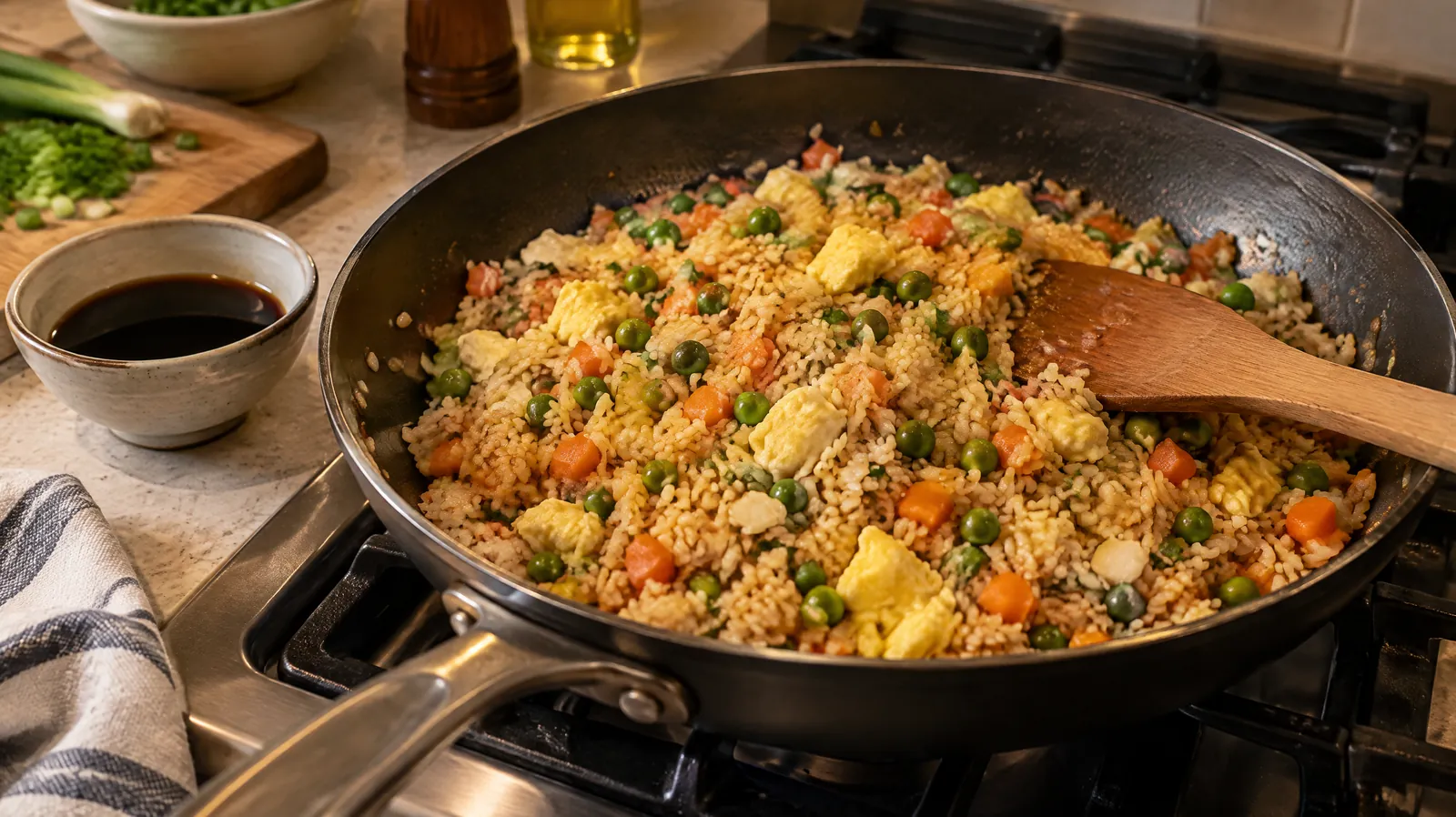
Thursday’s fried rice is also where the rules pay off. It is only a good dinner if the rice went into the fridge quickly on Sunday. Rice that sat in a covered pot all evening is exactly what the textbook outbreak is made of.
The short version for the fridge door
- Spread cooked rice and grains thin to cool, then move them to shallow containers.
- Get them in the fridge within two hours (one hour on a hot day).
- Use within three to four days; label the day it was cooked.
- Freeze what you won’t use by midweek, flat and portioned.
- Reheat to steaming hot, only the portion you’ll eat, and only once.
None of this takes more than five extra minutes on a Sunday. It is the difference between a pot of rice that quietly carries a family through a busy week and one that eventually catches up with somebody.
Sources
- USDA FSIS: Leftovers and Food Safetyfsis.usda.gov
- USDA FSIS: Keep Food Safe! Food Safety Basicsfsis.usda.gov
- USDA FSIS: Freezing and Food Safetyfsis.usda.gov
- FoodSafety.gov: FoodKeeper Appfoodsafety.gov
- FDA Consumer Update: Are You Storing Food Safely?fda.gov
- FDA: Bad Bug Book, Second Edition (Bacillus cereus chapter)fda.gov