
The Least Glamorous Tool in the Kitchen
Mid-October notes on the instant-read thermometer: where the probe goes, what to do while the reading settles, and why it belongs next to the stove rather than in the drawer.
kitchen notesexplainerweeknight dinners
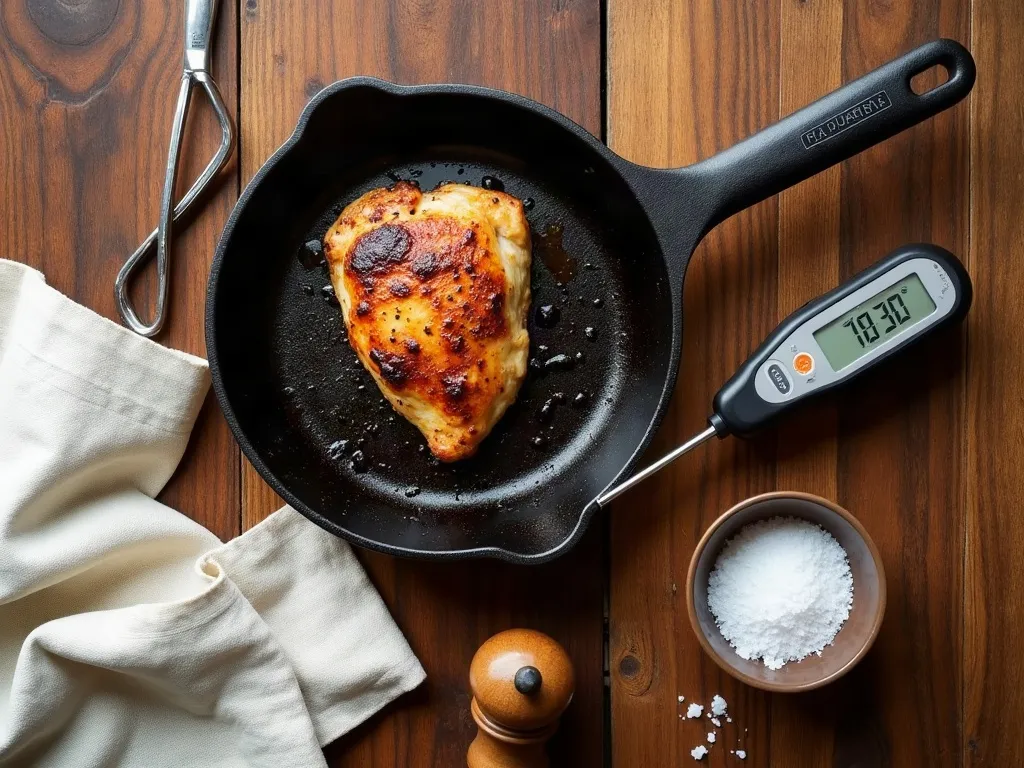
Every so often we get asked what to buy for a kitchen that actually cooks dinner most nights — not the big purchases, the small ones that quietly change how the evening goes. A second sheet pan, so the vegetables aren’t crowded. A jar of coarse salt within arm’s reach of the stove. And the tool nobody puts on a registry: a thermometer that gives you a reading in a few seconds, costs very little, and takes up the space of a pen.
It earns its place here because our recipes have become more specific than they once were. Where an updated method line names a temperature, that number is doing work an experienced eye used to do — it tells you when to stop, instead of asking you to read the colour of the juices and hope.
You will notice there is no temperature in this post, and that is on purpose. The card in front of you carries the number for the dish you are actually cooking; our updated recipe pages name it in the method, and that is the figure to work from. What a note like this can usefully explain is the part that never makes it onto a recipe card: where the probe goes, and what you do in the ten seconds around the reading.
Where the probe goes
The number is only as good as the spot you measured, and almost every bad reading comes from one of five places.
- The thickest part of the piece, not the thin edge that curls up in the pan. The edge is always done first and will tell you the dish is finished while the middle is still cool.
- Away from bone and fat. Bone conducts heat differently than meat does and reads high. On a whole bird, go into the deepest part of the thigh and leave the breast alone — the breast is thinner and will finish before the thigh does.
- The centre, for anything ground or shaped. A meatloaf, a burger, a stuffed pepper: the middle is the last place to come up to temperature, which is why the meatloaf is the dish that taught us to keep the thermometer out in the first place.
- From the side, for thin cuts. Cutlets, fajita strips, a flattened breast — slide the probe in horizontally, parallel to the pan, so the tip sits inside the meat rather than poking out the far side.
- Never touching the pan. A probe resting against cast iron or foil reads the pan, not the dinner. This is the single most common way to get a number that makes no sense.
For a casserole or a pot, stir first, then measure in the middle of the dish rather than at the edge, where the ceramic stays hotter.
The ten seconds
An instant-read does not mean instant. Give the tip a moment in the meat and watch the numbers climb until they settle — a cheap one can take several seconds longer than the box claims, so wait it out rather than guessing at the first flash. Then take the probe out.
One reading is the goal. Every extra stab is another hole and another spoonful of juice on the board; if you genuinely doubt the first number, take a second reading on the other side of the piece rather than going back into the same spot five times. Wipe the probe on a kitchen towel, not on your apron, and you are done.
Rest, then cut
The reading is where the cooking stops, not where the eating starts. The middle keeps warming for a few minutes after the pan comes off the heat, which is the good news: pull the dish when it is close to the number and let the rest of the climb happen on the board.
A loaf or a whole bird gets ten minutes or so — a working number, not a rule — and the Sunday roast chicken notes are where that habit did the most work for us. A single cutlet gets as long as it takes to move the pan to a cool burner and set the table. Cut into it early and you undo the reading: the juice that should have stayed in the slices ends up in the well of the board.
Keep it where you cook
The distance between owning a thermometer and using one is a drawer. That is the entire failure mode. Coil it on the crock beside the stove, or stand it probe-up in the utensil jar with the tongs, and it becomes something your hand picks up without a decision. Put it away with the cake tins and it will be a tool you own and never reach for.
The weekend is where it pays for itself twice: a roast is enough of an occasion to test the number, and after two or three of them you know how your oven really runs, dial setting aside. That knowledge then applies to everything else you bake or braise all week.
What the number is not
It is not a grade. A dish cooked to the number is not better food than the same dish cooked by feel — it is simply dinner that came out the way you intended, on a Wednesday, on the first attempt instead of the fourth.
It also does not fix a recipe. If the chicken parm from the 2010 archive comes out dry at the right internal temperature, the problem is the oven rack or the pan, not the reading, and a second thermometer will not help.
When you are reheating food that came out of the fridge, the card’s number stops being a preference and becomes the reason it is there. Follow it rather than the clock.
What the thermometer really buys you is not precision for its own sake. It is permission to walk away from the oven door — to set a timer for the pan instead of standing over it, and to spend the last ten minutes of dinner prep doing something other than hovering. Ten years of hovering is what it replaces. That seems worth the price of a pen.