
Empty the Freezer Before You Fill It
The freezer is fullest in October and needs room by November. Notes on a ten-minute drawdown: three piles, freezer-first dinners, and the shelf to aim for.
freezer mealsmeal prepfall cookingkitchen notes
Every freezer in a house that cooks has a season of its own, and ours runs about six weeks behind the calendar. September fills it: the last of the garden, a double batch of chili because the pot was already out, a bag of stock from a Sunday bird. By late October the drawers are packed and the door barely closes on the ice tray. By the third week of November, we need room in there for a bird and a pot of stock, and there is none.
So this is the week we start eating it down. Not with a plan — with a deadline.
The difference between a museum and a pantry
The freezer is the only appliance in the kitchen that rewards good intentions twice: once when you put something in, and again when you take it out. Skip the second half and it becomes a museum of a hopeful September, with a label on every exhibit and nobody allowed to touch anything.
A drawdown is not a purge, and it is not a moral exercise about waste. Some of what goes in during a good September is simply optimistic, and the cost of optimism is a few bags that leave in a bin bag instead of a skillet. What matters is that by the middle of November there is a shelf with nothing on it.
Ten minutes with the door open
Take everything out of one drawer or one basket and sort it into three piles. No notebook, no spreadsheet — the door list is a different job and it can wait.
The first pile is dinners: a whole meal in a bag, one pan and no decisions. The second is components: stock, cooked beans, a sauce, a purée, bread ends. The third pile is questions — the things you cannot identify in under three seconds.
The third pile is the only one that needs a rule. An unlabeled bag gets opened. If it smells like something you would happily eat, it becomes a soup base or a pasta sauce tonight; if you are still standing there asking, it has already answered. A freezer is not a filing cabinet; an unnamed bag is not going to become dinner on a Wednesday when you are tired, which is the exact moment it would have needed to be.
Labels, incidentally, are what stop the question pile from getting any bigger. Tape and a marker, four short lines, written while your hands are still cold.
Components are not dinners
This is where drawdowns stall. A bag of stock is not dinner. Neither is a cup of beans or a jar of squash purée, and none of them will feel like dinner at 5:40 on a Tuesday, which is why they get pushed to the back again every single week.
The move is to give them a partner before the week starts. Stock plus a handful of odds and ends is soup, and it always was. Beans go over rice or under an egg. Purée thickens a pot of chili without anyone noticing. A component eaten on a Tuesday is worth more than the same component saved for a better idea, because the better idea is not coming — it is nearly November.
Let the freezer start dinner
The habit that makes a drawdown painless is a small change of order: for one week, dinner starts by opening the freezer instead of the fridge.
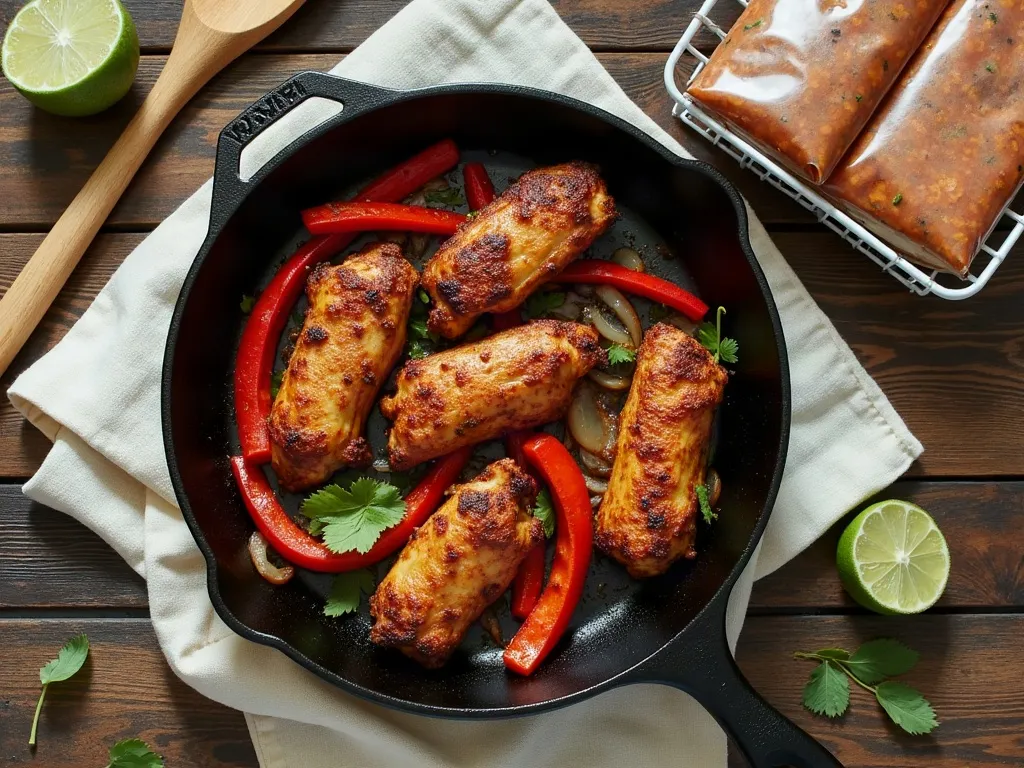
The fajita bags are the model here — a portion pressed flat, seasoned before it froze, and it goes into a hot skillet more or less as it is. Nothing about that requires deciding anything in the morning, which is the whole point. Per the USDA-based guidance behind Fight BAC!, frozen leftovers can be safely reheated without being thawed first, in a saucepan, a microwave or the oven.
What the guidance is firm about is the counter. Thawing food at room temperature is the one shortcut not worth taking; the safe routes are the refrigerator, cold water, or the microwave, and the refrigerator is the one that suits a bag you meant to eat tomorrow. So if the bag needs thawing rather than reheating, it comes out the night before, on a plate on the bottom shelf, and not onto the counter while you go and do something else.
Aim for a shelf, not a clean freezer
Nobody needs an empty freezer in November. You need roughly the footprint of a bird, plus a little room for the stock you will make from the carcass afterwards — that is the Sunday flavour habit paying itself forward, and it needs a flat place to lie down.
Pick the date now. Somewhere around ten days before the holiday works out for most households: you will still be cooking from the freezer for another week, but the shelf will be there when you need it. Then do the thing that is much harder than the drawdown, which is not filling it back up. A cleared shelf triggers an almost physical urge to load the car with bulk chicken and frozen peas; resist it for two weeks. The freezer’s job this month is to have room, not to be full.
Freezers are honest appliances. They do not reward ambition or a good grocery haul, only the person who put dinner in on a Sunday and took it out on a Wednesday. October is when you make sure that person has something to find.