
The Pot That Goes Into the Oven
A braise is a short recipe with a long wait — the fourth evening shape of the cold months, and the only one that heats the kitchen while it works.
fall cookingweeknight dinnersone-pan mealskitchen notes
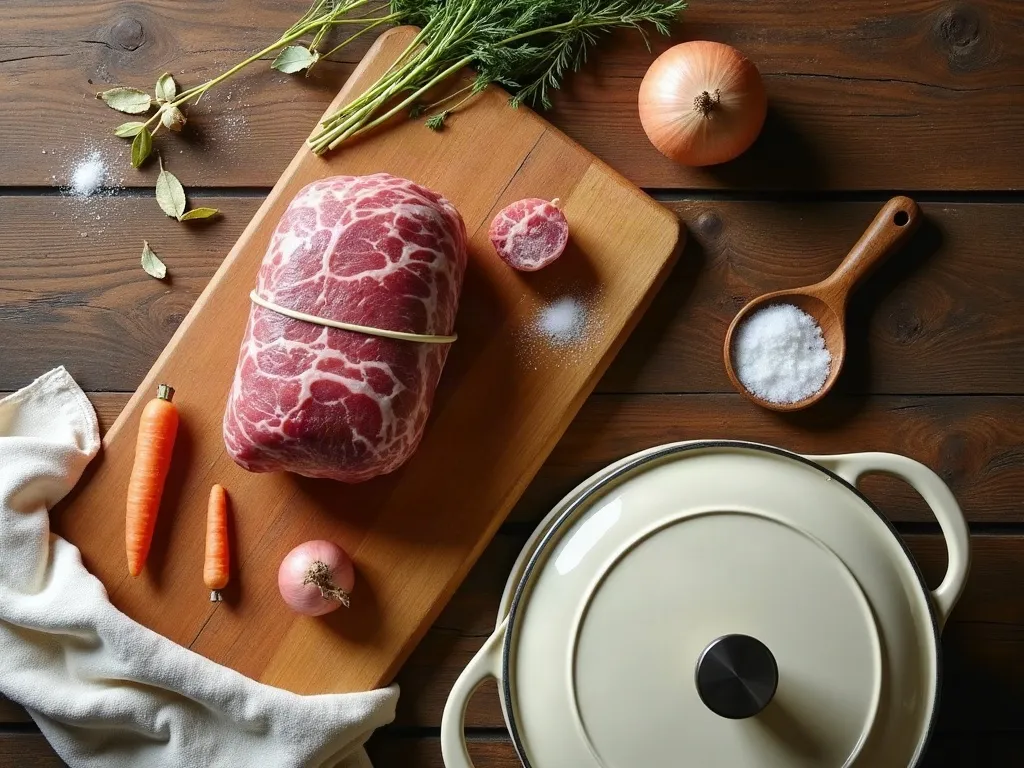
The first week of November reshuffles the evenings. The market has thinned to roots and greens, the window over the sink is black by five, and the cooking that felt light in September wants a different shape. Three of those shapes are familiar here already: the pan dinner that buys an evening in half an hour, the pot of soup that asks for twenty minutes of standing, and the slow cooker that decides dinner before the day starts.
There is a fourth, and it gets written about least. A braise takes hours — two or three of them — and almost none of your attention. The oven does the work, and in a month when the light goes early that has a second benefit nobody puts in a recipe: for a whole afternoon, the kitchen is the warmest room in the house.
A short recipe with a long wait
Braising looks intimidating because its timings are long, and long timings read as difficulty. They are not. The list in front of you is short — a piece of meat, an onion, a carrot, a spoonful of tomato paste, something acidic, liquid, salt — and nothing on it asks for a technique beyond browning.
Brown the meat first, in the pot it will braise in, and in batches: a crowded pot steams the meat grey instead of searing it, and the brown bits on the bottom are most of the flavour the sauce will have. Then the aromatics in the fat that is left, a minute of tomato paste until it darkens, the liquid, the lid, and the oven. Everything after the lid goes on is waiting, which is why a braise suits a Saturday with errands in it far better than a thirty-minute dinner suits a Wednesday.
The cuts that need it
Braising is not a technique you apply to good meat. It is what the other cuts are for: chuck, shoulder, shanks, short ribs, a whole pork shoulder, chicken thighs with the bone still in. What they share is a good deal of connective tissue, which is the thing long wet heat converts into the richness people mean when they say a stew tastes like more than its ingredients.
A lean, tender cut in a braise is a waste of both. There is nothing in it to give, so three hours turns it stringy while the sauce goes on tasting of itself. The cheap cuts are not a compromise here; they are the correct ingredient, and they are cheap for reasons that stop mattering once the pot is in the oven.
Two-thirds up, not covered
If a braise has one measurement, this is it. The liquid comes about two-thirds of the way up the meat — the bottom cooks in liquid, the top third cooks in its own steam under the lid. Cover the meat completely and you have made a boiled dinner with a thin sauce. Use too little and the pot scorches at the edges before the middle is ready.
Put the acid in early, while there is still time for it to round out: a glass of wine, a can of tomatoes, a spoon of vinegar, a strip of orange peel. Salt later, or in two goes. The liquid reduces as the afternoon passes, and a pot salted at the start for a sauce that has not yet concentrated is the commonest way a good braise ends up too salty to serve.
The oven temperature is the one number this piece will not give you. The card you are cooking from already has it, and a braise wants a low oven and a long stay — your recipe will be more specific, and it will be right about your pot.
The cue is a fork, not a clock
Times in a braise are estimates of a moving target: the shape of the cut, the thickness of the pot, how cold the meat was going in. What you are waiting for is not an hour on a dial but a piece of meat that gives way when a fork turns in it, without the pot moving across the stove.
So start testing earlier than the recipe says, and keep the pot in the oven until the fork agrees. A braise twenty minutes past its moment is still good — softer, richer, the sauce a little more concentrated. One pulled early is a tough dinner nobody can fix at the table, because the one thing long cooking cannot be hurried through is the part that makes the meat tender. Aim to be early rather than late, and let the pot sit with the oven off while the table gets set.
Day two is the actual product
A braise is not one dinner, and the second one is usually better. Tonight the meat goes into a wide bowl with a spoonful of its liquid over the top and something to mop with — bread, mash, rice, whatever the liquid suits. Tomorrow it comes apart with two forks and goes into a hot pan with a ladle of that liquid reduced to a glaze, which is a different dinner entirely: over rice, in tortillas, alongside a pile of greens.
The vegetables are not an afterthought. The roots in the drawer that have stopped being crisp are exactly what this pot wants, cut to a size that survives the hours — and a soft root, as that post argued, is a root with a different job rather than a lost one.
Then there is the liquid, which is the part worth protecting. It has been through meat, aromatics, acid and time, and it makes a better soup base than anything made for the purpose. A cup of cooked beans stirred into the last of it becomes a third dinner with no work at all, which is the argument behind a pot of beans: the beans and their liquid, with the liquid as the real prize. The archive’s slow cooker paleo chili is the same idea with the heat under the pot instead of around it, down to its trick of thickening with puréed squash.
One pot, one board, one knife
Cleanup is where a braise quietly wins. It browns, braises and serves from the same vessel, so the washing-up at the end is a pot, a board and a knife — and the pot was already dirty.
Pack the leftovers away the same evening, in shallow containers rather than the pot, and keep the meat under its liquid. Meat stored dry and reheated is stringy the next day; meat that never left its braising liquid comes back the way it went in. Flat bags with a ladle of liquid in each freeze well, and the label wants what is in it, the date, and whether the vegetables are already there — the same tape-and-marker habit that keeps a freezer legible.
None of this is a skill. It is a choice about which shape of cooking fits the day you are actually having, and a braise asks for one thing nobody has at 5:40: an hour that has already happened. In November, when the dark arrives before the homework is finished, that is worth more than speed.