
Somebody at This Table Doesn't Like It
Every household has one eater who will not touch a particular thing, and the plate that comes back with it pushed to the rim is not a verdict on the cooking. Notes on texture, sauce on the side, and the second dinner that costs more than it saves.
weeknight dinnerskid-friendlykitchen notes
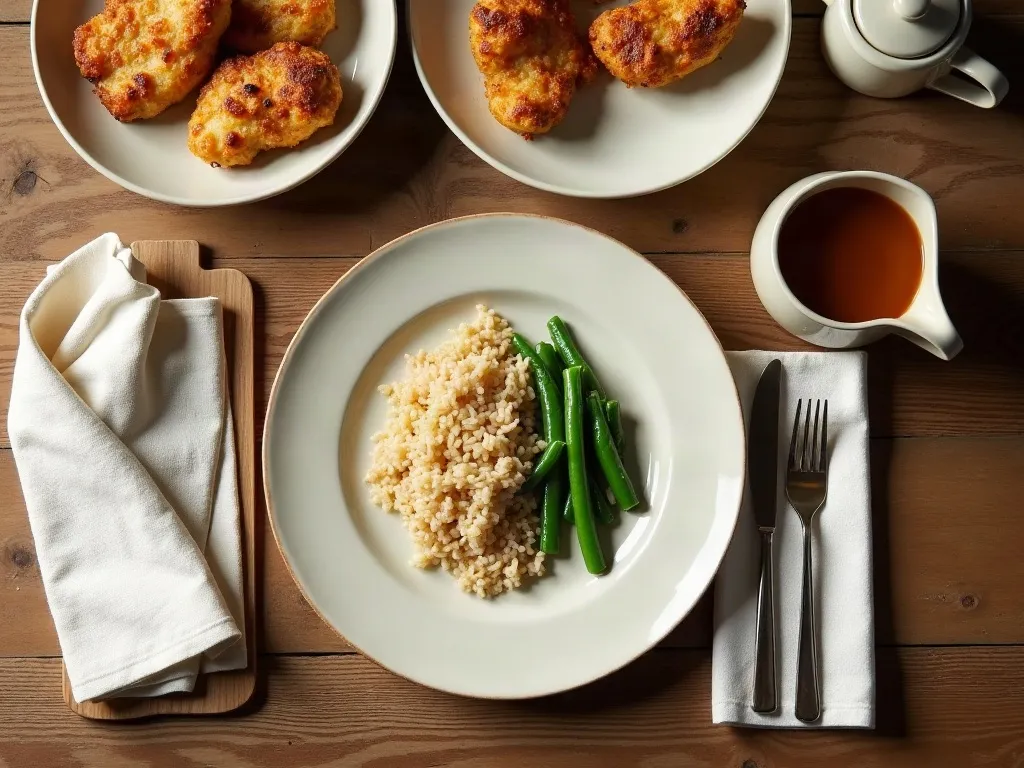
There is a particular way a plate comes back when one thing on it has been turned down. Not scraped, not spilled. Pushed — moved to the rim in a small tidy pile, with the rest of the dinner eaten around it and no announcement made. The cook sees that pile from the other end of the table and reads it as a review of the cooking. It almost never is.
A dislike is not a judgement of the food. It is a report of a fixed condition, and a household already carries a few of those: a kitchen with one counter, an oven that runs cool at the front, a corner of the fridge where things freeze. Nobody takes those personally. The palate is the same kind of fact, except it is the one that never gets written down as a constraint, because saying it out loud sounds like somebody at the table is being difficult about dinner.
It is usually not the flavour
Ask what is wrong with the mushroom and the answer is rarely that it tastes of mushroom. It is the squeak. The wetness. The way it slides under the fork. The same goes for almost everything that gets pushed aside, and it is nearly always one of three things: texture, temperature, or contact — the sauce arriving on top of the beans uninvited, the onion chopped small enough to hide in the rice, the gravy that was supposed to be optional.
That distinction is worth more than it looks, because it means the ingredient is not the unit. The form is. A tomato passes as a thick slice with salt and fails as a sauce. Cheese passes cold and fails melted, or the reverse, depending on who is at the table. Carrots are fine raw and suspicious cooked: one vegetable, two completely different dinners, and the household’s verdict applies to only one of them. So the conclusion is never “we cannot have mushrooms again”. It is “we can have mushrooms in a form that works”, and finding that form usually takes about three tries.
A refusal is also usually narrower than it sounds. “I don’t like fish” frequently means “I don’t like fish with the skin on”. Those are smaller problems than they first appear, and each one already has a version of the dish that works.
Sauce on the side is the cheapest change in the kitchen
Two words, and no extra cooking. Serve it beside. The pot is the same pot, the work is the same work, and the only thing that has changed is that one decision has moved from the cook to whoever is eating. A plate that arrives finished — dressed, sauced, combined — is a decision made in advance on somebody else’s behalf. A plate with the sauce in a small jug, or the dressing still in the bottle, lets the person at the table make it themselves, and a portion somebody served themselves gets eaten more reliably than the same portion handed over.
The move works for anything normally stirred in: the gravy, the yogurt, the chili crisp, the herbs, the lemon. It works between two adults who disagree about mayonnaise, and it works with a child who is fine with pasta and not fine with pasta that has anything on it. It costs one small dish.
There has to be one certain thing on the plate
Every dinner needs one component that nobody at the table has a problem with, in a real amount. A proper spoonful, not a token slice of bread and not a bribe. Not to fill anybody up — so that the plate has somewhere to start, rather than being a wall with one small gap in it. Rice, bread, the plain half of the tray, the pasta before the sauce went on: it is worth knowing which one is the household’s certain thing, and putting a real amount of it down.
The second dinner is the fix that costs the most
The obvious solution is to cook something else for the person who will not eat the first thing, and it is the one that quietly makes the problem permanent. It works for a week. Then it is the routine: two services a night, one cooked with care and one cooked with resignation, and the first plate getting worse every week because nobody cooks attentively for a person they have already decided will not eat it. After a month of that, nobody at the table believes the first plate was ever meant for them.
The version that works is smaller than a second dinner, and it happens at the end rather than at the start. Divide late. Take the plain portion out of the pot before the sauce goes in. Put the vegetables in two bowls instead of one, one of them dressed. Hold back a plate of the uncombined parts before you assemble. It is one extra dish, not one extra meal, and the kitchen keeps cooking one dinner — which is roughly what the component approach does earlier in the day, arranged at the table instead of in the containers.
Two things that do not work
Hiding it. The purée in the sauce, the grated vegetable in the meat, the thing chopped small enough to disappear. It works for a while, and then it stops, and when it stops the whole dish becomes suspect rather than the one ingredient — the trade is a dislike for a distrust, which is worse, and it was made on the cook’s behalf without asking.
Arguing at the table. A small spoonful left at the edge of the plate is an offer. Three sentences about how good it is becomes a demand in a friendly voice, and the plate turns into a conversation. What gets remembered at the end of that evening is the conversation, not the food, and the conversation makes the next appearance of the ingredient harder rather than easier.
The list is shorter than it looks
None of this is only about children. The adult who does not do cilantro, the guest who does not eat fish, the person who thinks fruit belongs nowhere near a main course — the same three questions apply, and the same two-word fix usually answers them. A household’s dislikes look like a long list of ingredients and are usually four or five forms once somebody writes them down.
Then there is the part that only shows up over months. An ingredient that keeps arriving, cooked well, without ceremony and without a speech, has a better record than an ingredient that was won once at a table. The winning is expensive and does not repeat; the arriving is free and does.
What the pile at the rim is telling you
The plate comes back the same way next week and the week after. If the pile is smaller in one form and the same size in another, the message has already been delivered, and no discussion was needed to receive it. What comes back is a map of the forms this household will eat, which is a shorter and far more useful document than the list of things it will not.
The cook’s job is to keep the food coming in the forms that work, and to leave the rest on the plate without taking it personally. Teaching somebody to cook is its own separate problem, and the notes on what a child can actually do in the kitchen are about the work rather than the plate. This one is only about the plate, and about how little it takes to keep the same dinner on the table for everybody.