
Plan the Oven Before You Plan the Menu
A month out from the last Thursday of November, the holiday table is decided by one oven and one clock rather than by which recipes made the cut — plus the make-ahead that buys back the afternoon.
fall cookingmeal prepkitchen notes
Thanksgiving falls on 26 November this year — a month from today — and most of the planning that happens between now and then will be about recipes. Which bird, which potatoes, whose pie gets the nod this time. All of it matters, and almost none of it is what makes the day go badly.
Because the holiday table is not really a menu problem. It is an oven problem: one oven, one clock, and a room full of people who all expect to eat at the same hour.
Write the serving time down first
Before the recipes, write down the hour you want to sit. Then count backwards from it in oven hours rather than minutes, because that is the currency you actually have. A menu of nine dishes that each want a hot oven for forty minutes is not a menu, it is a queue — and someone spends the whole afternoon standing in front of it, holding a tray, waiting.
The number is smaller than it feels. Between noon and a six o’clock table there is room for the bird and two, maybe three, other dishes that genuinely need heat. Everything past that has to come from somewhere else: the stovetop, the freezer, the day before, or off the menu.
Sort the dishes by what they ask of the oven
Every dish on the list goes into one of three piles.
Wants a hot oven, wants it late — rolls, roasted vegetables, anything that has to arrive crisp. This is the pile that fights for the last forty minutes before you sit.
Wants the oven, doesn’t care when — gratins, casseroles, stuffing, anything that is content covered in a warm oven and brought out when there is room.
Doesn’t want the oven at all — cranberry sauce, the salad, potatoes boiled and mashed on the stove, a plate of cold things, a pie baked the day before.
Most holiday menus are almost entirely the first pile, which is why the afternoon feels like traffic. Moving two dishes into the third pile is the cheapest repair available, and nobody at the table will ever notice it happened. A cranberry sauce made on Tuesday tastes like cranberry sauce. A second oven costs several thousand dollars.
The freezer is what buys back the hours
A month out is when make-ahead can start, and it needs shelf space more than it needs ambition — which is the other reason for the October freezer drawdown: a shelf has to be free before anything can go on it. Stock in flat bags, pie dough as discs, rolls par-baked and frozen, a gravy base, the cranberry sauce cooked now instead of on the day.
Label each one with what it is and what to do with it: the date, and the oven temperature and minutes exactly as the recipe gave them. Written on the way in, it gets read on the way out by someone holding a hot pan with no free hand for a cookbook.
The bird is a resting problem, not a timing problem
Nobody ruins a holiday bird by picking the wrong recipe. They ruin it at the oven door, opening it every ten minutes because a clock is the only instrument they trust and the clock is guessing. The number is on the card in front of you, and the probe goes into the deepest part of the thigh, away from the bone — the same habit as any other roast, which is what the Sunday chicken notes are about.
Rest is the part of the schedule that pays for itself. The bird comes out, the oven goes up for the rolls, the gravy finishes on the stove, the plates get warm, someone finally gets a drink. Twenty minutes of resting is twenty minutes of everything else, and it is the only quiet window the cook gets all day.
The night before is its own dinner
If people arrive the day before — which is most of the reason the week feels long — that meal is not a preview of the holiday food. It should be a pot that holds, cooked once in the morning and eaten whenever the last car pulls in. The archive’s slow cooker paleo chili is the shape for that night: it improves while it waits, and it does not need a plate to be eaten from.
The corollary is a rule worth keeping. Nobody cooks two big meals in two days. The night before is deliberately the lesser one.
Set the table before you cook
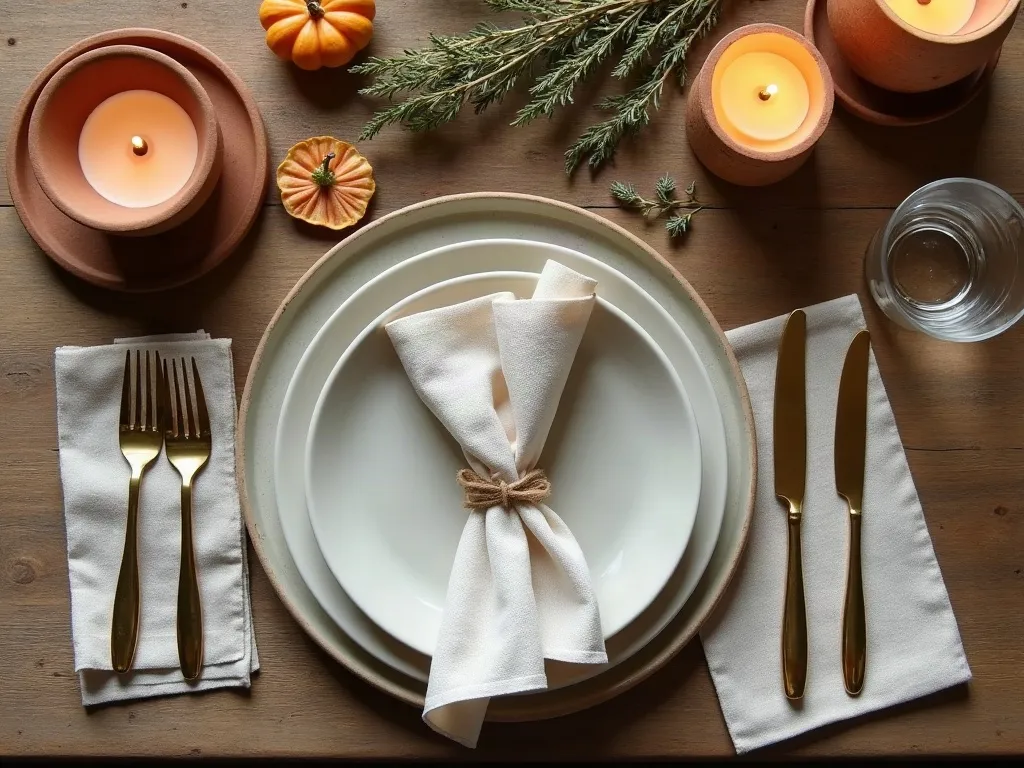
At ten in the morning, set it. Not for the tablecloth’s sake — choosing the serving dishes at ten is how you find out how many you actually need, and whether the potatoes have a bowl. It also tells you the truth about the counter: whether it can hold what did not fit on the table, or whether the day is going to involve a lot of lifting.
A table set early is a decision already made, and decisions are the scarce thing on the day, not butter.
Let other people carry something
Every host says “just bring yourselves” and then cooks for fourteen alone. Give dishes out with names attached, and be specific — the rolls, the ice, the thing your sister always makes. Then let those people into the kitchen when they arrive. A second pair of hands at the sink is not an intrusion; it is the difference between hosting and catering.
And the host sits down. Not at the end, not after the plates are cleared, not with a dish towel over one shoulder. A plate eaten standing at the counter is the one thing the day genuinely did not need.
A month out, the list is three lines
Freeze one thing this week — stock, dough, a tray of something. Put the serving time on the calendar and count the oven hours backwards from it. Decide which two dishes come off the oven list.
That is the whole of it for now. The rest is the week of, and it will be much smaller than it looks from here. Recipes can wait a month; oven space cannot be found in an afternoon.