
The Sunday Bird, and the Stock It Leaves Behind
A whole roast chicken is one oven session that pays out three times: Sunday's dinner, a second night's chicken, and a pot of stock from the carcass. Notes on the method, the thermometer, and the clock.
weeknight dinnersmeal prepfall cooking
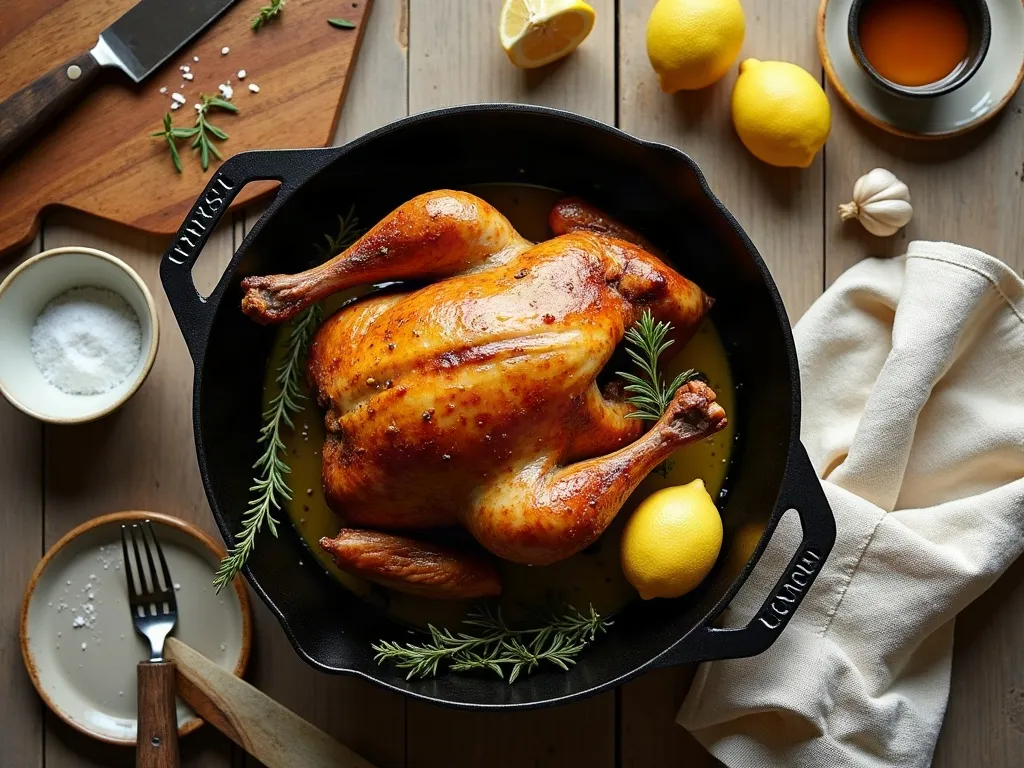
Somewhere around the middle of October the oven becomes the busiest appliance in the house again. It is also, for one afternoon a week, the most efficient thing a kitchen can do: a whole chicken goes in, and three separate dinners come out of it.
That is the argument for the bird rather than the boneless breasts. Not romance, just arithmetic. You are heating the oven anyway, the skin and bones you paid for are doing work instead of going in the bin, and the carcass is a pot of stock you would otherwise buy in a carton.
Start with a dry bird and a hot oven
The single biggest difference between a crisp-skinned roast and a pale, steamed one is water. Pat the chicken dry inside and out with paper towels, and if the timing works, leave it uncovered in the refrigerator for an hour or overnight — the cold air pulls moisture off the skin. Salt it early, ideally the night before, and let the salt sit on the surface rather than rubbing it in.
Then a hot oven. Somewhere around 425 °F works for a bird in the four-to-five-pound range, and it will take roughly twenty minutes per pound — but those are estimates, and the oven’s own mood is a bigger variable than the weight. Do not open the door to baste; every peek drops the temperature and buys you nothing the skin isn’t already doing.
The number that matters is not the clock. It is 165 °F in the thickest part of the thigh, with the thermometer not touching bone. That is the USDA’s safe minimum for poultry, and it is the same figure the archive’s chicken recipes already carry — the 2010 baked chicken parmesan finishes its cutlets to exactly that internal temperature. Take the bird out when the thigh reads 165 °F, and let it sit for ten or fifteen minutes before you carve. The carryover heat finishes the job while you set the table, and the resting time is what keeps the juice on the cutting board instead of in the pan.
The second night is the point
While the oven is still warm and the kitchen is still yours, pick the meat off the bone. Not later — later never comes, and a bird that sits in the refrigerator intact stays intact until it becomes a chore.
Sort it into two piles as you go: neat slices for the first night’s plate, and strips or shreds for the next dinner. That second pile is the whole reason this is a weeknight plan rather than a Sunday hobby. Warm it briefly in a skillet with peppers and onions and you have the archive’s chicken fajitas; simmer it under crushed tomatoes with a ricotta-and-basil topping and it becomes the parmesan again. Either way the second meal is assembled, not cooked from scratch.
The rest of the meat goes into a shallow container and into the refrigerator within about two hours of coming out of the oven — a shallow container because a deep one keeps the middle warm for far too long. Cooked chicken keeps roughly three to four days that way, so the second night’s plan has a comfortable window.
Then the bones, which are dinner number three
The carcass goes into the biggest pot you own along with the pan drippings, an onion, a carrot or two, a couple of garlic cloves, a bay leaf, and cold water to cover. Simmer, never boil — a hard boil churns the fat and makes a cloudy stock, and it gains you nothing. Skim the foam in the first twenty minutes, then leave it alone for two to four hours, which is a range, not a rule. Strain it, and you have stock.
Cool it fast, the same way you would cool anything else: shallow containers, or the pot set in a sink of cold water. Once it is cold, the fat lifts off in a sheet and comes away in one piece. Then either use it within a few days — treat stock like any other leftover — or freeze it flat in zip bags, which is how the soup portions from earlier in the month already live in the freezer. The carcass stock then becomes the base of a soup built from whatever the vegetable drawer is still holding, or the liquid in a braise, or the reason a Tuesday gravy tastes like it took all day.
Two habits make the rest of it safe and simple. Wash your hands and the board after the raw bird, before anything else lands on them. And when you reheat what you made — the soup, the gravy, the second night’s chicken — bring sauces and soups to a boil, and heat other leftovers through to 165 °F rather than until they feel warm. The refrigerator holds the cooked meat at 40 °F or below in the meantime.
What it costs you
Twenty minutes of actual work on Sunday: salt, dry, into the oven, then pick and simmer. The rest is the oven’s time and the refrigerator’s. In exchange, three evenings have something waiting — which is the only kind of meal prep that survives a bad week.
One bird, one oven, three dinners that already know what they are.