
Soup Season, and the Pot That Feeds the Week
October's third dinner shape is a pot of soup: four moves instead of a recipe, a home for the odds and ends, and enough left over for a thermos lunch and a flat bag in the freezer.
fall cookingweeknight dinnersfreezer meals
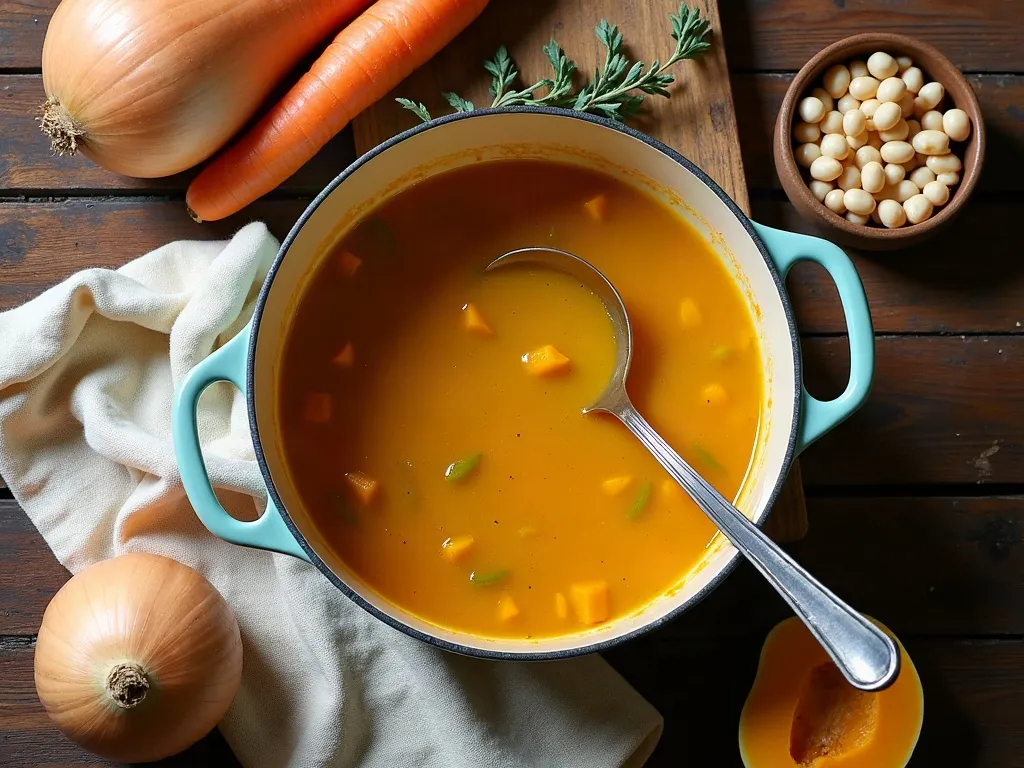
The first cold rain of October finally arrived this week, and with it the third shape an evening can take. We have written about the other two already this month: the pan dinner, which buys the evening in half an hour, and the slow cooker, which buys it with a decision made before the day starts. Soup is neither of those. It asks for twenty minutes of standing at the stove, then leaves you alone — and it never makes only one meal.
A soup is four moves, not a recipe
Every good pot follows the same order, and none of the steps needs a measurement.
Begin with something aromatic softened in fat. An onion, a couple of carrots, a stalk or two of celery — or whichever part of that trio is still in the drawer. Ten slow minutes here does more for the finished soup than anything added later.
Then the liquid. Stock if the pot needs depth, water if the ingredients underneath have flavour of their own, a can of tomatoes if that is the soup you are making. Enough to cover, and no more: soup can always be thinned at the end, and it cannot easily be concentrated.
Then something with body. Beans, lentils, barley, rice, potatoes, a wedge of squash, a handful of noodles, the last of a roast chicken. One or two of those, not five.
And finally a finish. More soups are flat for want of acid than for want of salt, so reach for that first — a squeeze of lemon, a splash of vinegar, a spoonful of something sharp — then parsley, or cheese, or a thread of good oil over the top.
Some pots get invented half an hour before dinner. Soup is the dish that forgives that.
The odds and ends are the point
No other pot is as happy to be built from the remains of other meals. Half a bunch of celery that will not survive the week, three carrots, a cup of cooked beans from the freezer, the heel of a squash, the spoonful of tomato paste left in the tin, a parmesan rind if there is one. None of it has to match. Soup is where mismatched ingredients stop being mismatched.
Two habits are worth keeping. Add strongly flavoured things — dried herbs, garlic, tomato paste — early enough to steep, and anything delicate, like fresh herbs or a swirl of cream, only in the last minute. And taste before you salt, because the liquid keeps reducing, and a pot that tasted right at four o’clock can be too salty by six.
The archive’s chili is a soup by another name
The site’s own slow cooker paleo chili belongs in this conversation. It is a soup in everything but name — one big aromatic pot, left alone for hours — and it also answers a question that comes up with every thin soup. If the pot ends up watery, you rarely need a thickener from a packet. A potato, a handful of rice, or a cup of cooked squash broken up with a spoon will give a soup body while it simmers, and none of them changes what the soup tastes like.
What the pot leaves behind
Six cups of soup is dinner for four people once, or dinner for two and two lunches, and it is the lunches that make the pot worth the trouble. A thermos filled with boiling water while the soup reheats — and emptied just before the soup goes in — will still be warm at noon, which is how the packed lunch from earlier this fall gets a hot component on a cold day.
The rest can go in the freezer, and there is a right way to do it. Cool soup before it goes into the refrigerator; a full pot of hot soup can take hours to come down, and an over-filled fridge only slows it further. Divide it into wide, shallow containers, or stand the pot in a sink of cold water and stir it now and then. Then portion it out — flat zip bags laid on a sheet pan until they freeze, or jars with an inch of headroom for expansion — and write the date on the outside.
The short version of the safety notes
Cooked soup should be in the refrigerator within about two hours, and the refrigerated portion is best eaten within three or four days. Reheat it to 165 °F, and bring soup to a boil rather than a bare simmer on the way back up. Thaw frozen soup in the refrigerator overnight rather than on the counter — there are three recognised safe ways to thaw food, and the counter is not one of them. The Core Four practices, which restate the USDA guidance, are a short read if you want the details.
October will keep handing us cold, wet evenings for months yet. A pot of soup is the cheapest way we know to meet them, and the only dinner that gets better on the second day.
Sources
- The Core Four Practices — Fight BAC!fightbac.org