
The Hour Between School and Dinner
The after-school hour is the meal nobody plans for. Notes on a plate instead of a cupboard of packages, the dip that decides whether vegetables get eaten, a small drawer in the freezer, and what shouldn't sit out on the counter all afternoon.
snackskid-friendlymeal prep
Dinner gets a plan. Lunches get packed, sometimes at eleven at night. This fall we have written about breakfast and about the slow cooker deciding dinner in the morning. The hour that gets no plan at all is the one right after school, when someone comes through the door hungry and the kitchen is the first place they look.
It isn’t a meal, which is exactly why it gets skipped when anyone sits down to plan a week, and exactly why it so often ends with a cupboard door open and nobody satisfied. A hungry person plus an open cupboard is a negotiation that nobody wins. What follows is not a snack philosophy; it is a short list of things worth having ready so that the question answers itself.
A plate beats a package
The single most useful move is to cut something and put it on a plate. A bag of carrots in the vegetable drawer is food. Carrots on a plate on the table are a snack. Same carrots, different afternoon, because the work was done by somebody who wasn’t hungry yet.
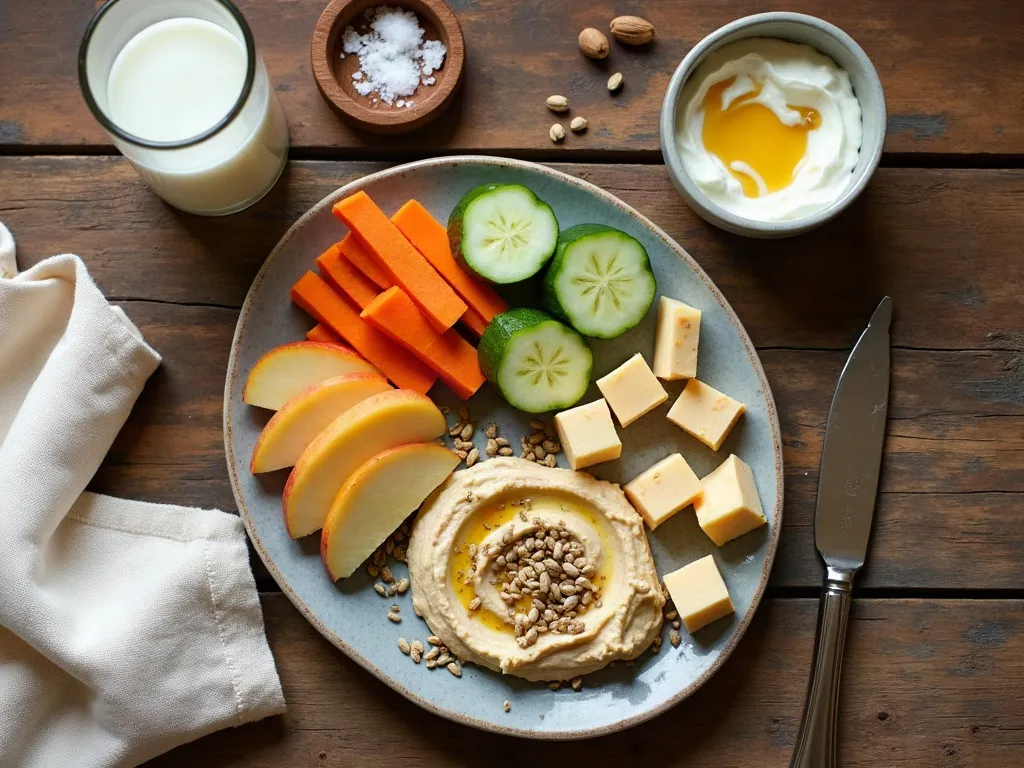
Build the plate from three directions and then stop: something crisp, something with a little fat or protein in it so the plate feels like it counts, and one thing out of the freezer. Cucumber, pepper, apple or pear wedges on one side; a few cubes of cheese, a small dish of yogurt, or a spoonful of nut butter on the other; and whatever came out of the freezer that morning or, in a hurry, a minute ago. Two or three items is plenty. A plate with six things on it reads like a chore, and chores get left on the table.
Cut vegetables and fruit hold up longer than most people expect if they go into the refrigerator dry. A container of pepper strips and apple wedges is worth making twice a week. Five days’ worth made on Sunday is not — it browns, and then nobody trusts it. This is the same cut-and-keep-the-wet-things-separate logic that makes a packed lunch travel well, applied to a plate that never leaves the house.
The dip decides
If one thing changes how much of the plate actually gets eaten, it is a small bowl of something to drag things through. Hummus, a thick yogurt with lemon and salt, a mashed avocado with lime, a bean dip loosened with its own liquid — the specific one matters less than its being there, cold and already made.
Keep it in a jar in the refrigerator with a spoon in it, made once at the weekend when the food processor is already out. A dip is not a garnish sitting beside the vegetables; for a lot of people it is the reason the plate comes back empty. Without one, the cucumber is the last thing standing, every time.
A small drawer in the freezer
The freezer item deserves its own corner — a snack drawer, kept separate from the labeled bags of chili and the meal portions, so that nobody has to dig past dinner to find something to eat at four o’clock.
This is where a fall baking tray pays off twice. Muffins from an apple afternoon go into the freezer individually wrapped and then into one bag, and so do savory bites, small pinwheels, mini quiches if you make them, and a bag of grapes taken off their stems. Freeze them loose on a tray first and bag them after, or the whole bag becomes a single block that has to be dealt with all at once.
Label everything with what it is and when it went in. A freezer turns anonymous quickly, and an unlabeled bag is the same as an empty one. Portion small, too: a snack you have to wait an hour for is not a snack. A muffin comes back in under a minute in short bursts, and a small bag of frozen grapes is edible before it has fully thawed, which is more than can be said for anything larger.
What shouldn’t sit out all afternoon
A plate that stays on the table from three-thirty until dinner is food sitting at room temperature, and that has a clock attached to it. Perishable food should be in the refrigerator within about two hours — the Core Four practices page restates the USDA guidance behind that rule — which translates into a simple habit on a school afternoon: put out what will be eaten in one sitting, and refill from the refrigerator rather than setting out a large plate to graze from for three hours. In a warm kitchen, sooner, not later.
The rest follows from the same idea. Keep the dip cold until the plate goes down. Put back what is left instead of leaving it out “in case”. Cut what you need, not what fills the board.
Put it where a hungry person looks first
We made the case for the nearest-shelf habit in our breakfast notes, and at four o’clock it matters even more, because there is no adult handing anything over. Placement has to do the whole job. Plates, small bowls and cups within reach without asking. The cut container at the front of the shelf, not behind the milk. The dip at eye level.
It also helps if setting it out is somebody’s job. Whoever is home first puts the plate down, or the plate gets made the moment the bags hit the floor. A snack that has to be requested may or may not happen; a plate that is simply already there always does.
Twenty minutes on a Sunday
None of this requires a recipe or a system of containers. One jar of dip, one container of cut vegetables and fruit, one small bag of something sweet from the freezer, and a plate that goes down at roughly the same time every afternoon. It isn’t dinner and it doesn’t need to be. It just needs to already be there — and then the hour between school and dinner stops being a raid and becomes the quiet part of the day that holds the rest of it up.
Sources
- The Core Four Practices — Fight BAC!fightbac.org