
When the Pot Has Already Gone Wrong
Most cooking advice assumes the pot can still be saved by paying attention. The real failures arrive at the last taste — notes on salt, heat, a split sauce, and the one thing that does not come back.
explainerkitchen notesweeknight dinnersfall cooking
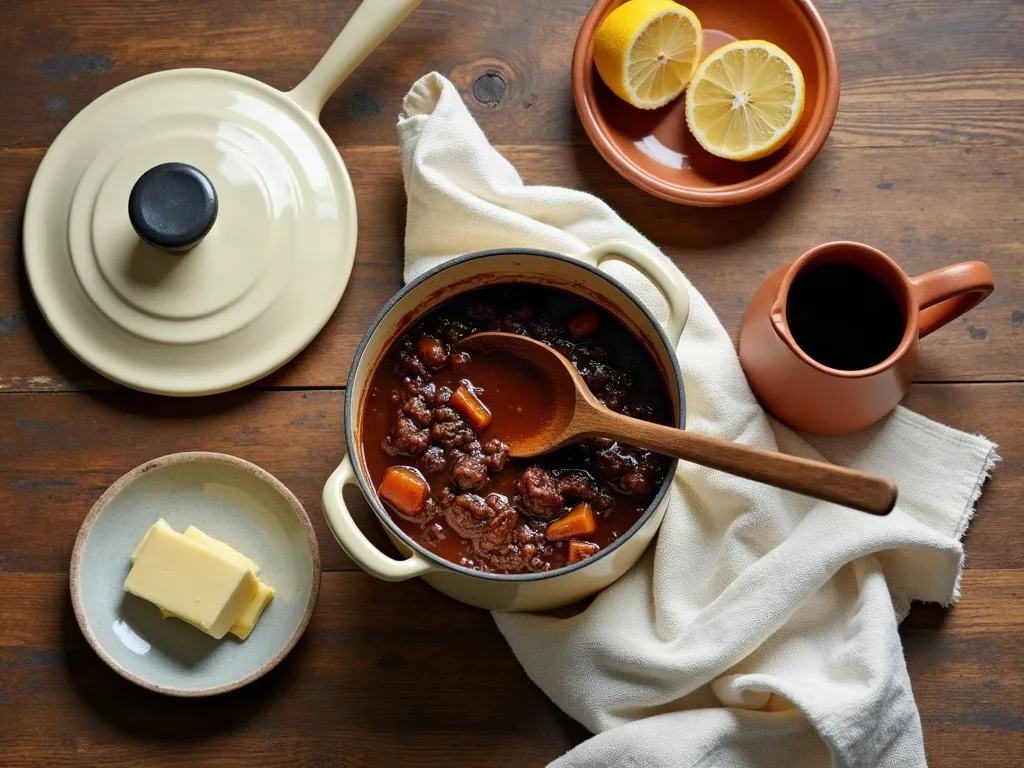
Recipes assume the cook is paying attention, and mostly that is fair. Watch the onions, taste as you go, don’t walk away from a roux. What a recipe has no line for is the moment after all of that, when you are standing at the stove with a spoon and the pot in front of you is not the pot you meant. Too salty. Flat. The meat has gone dry, or the sauce has separated into something that looks like a mistake, and dinner is twenty minutes away.
That is where most cooking writing stops, because the good version is easier to teach. This is about the ten minutes after, and about what a pot will actually accept once the thing has already happened. Not every failure can be fixed. Most of them can, in a smaller way than you would like.
Almost every failure is an amount
Split the usual disasters in two and a pattern shows up quickly. The technique failures — meat that steamed instead of browning, pastry rubbed too warm, a roux that tastes of raw flour — announce themselves early, while there is still something to do about them. The other group arrives at the end, and nearly all of it is quantities: too much salt, too little liquid, too much heat, ten minutes too long.
Quantities are still adjustable at six o’clock, which is the good half of the news. The bad half is that a pot is a closed system by then. Anything added to fix one problem dilutes everything else in the pot, so a rescue is never a return to the dish you planned. It is a trade. Knowing which trade you are making is most of the skill.
Salt only goes one way
Salt is the failure people notice first because it is the only one that cannot be taken back. Liquid can be reduced or added, heat can go up or down, a dry thing can be dressed — but salt travels in one direction, and every fix for it is dilution wearing a costume.
The potato from folk wisdom is the most repeated fix and the least effective one. The potato has been tried in this kitchen more than once; it has never once made a difference worth tasting for. A spoonful of sugar does not help either. It makes the first bite easier and the third one strange.
What works is unsalted volume that belongs in the pot. More stock, if it is a stew. A splash of cream or a spoon of butter, which coats and blunts. Plain rice or pasta underneath, so the salt is spread across more of the meal. Beans, if the pot can take them. And when it is badly over, the split: half the pot diluted for tonight, half stretched with a second unsalted batch of the same base and put away as two dinners instead of one. That is more work than a potato, and it is the only version that ends with something worth eating.
Thin, hot, dry
A pot that is too thin and a pot that is too salty are often the same pot at different hours of the evening. Reducing concentrates flavour and salt together, so a broth that tasted limp at five can be aggressive by seven. Thin things usually want body more than they want time: a spoonful of cornmeal, a handful of mashed beans, the last of a squash puréed in — the move our squash notes already argued for, and one that thickens without adding salt.
Too much heat is easier than people expect. The burn in a pot is usually asking for fat — a spoon of butter or cream, a little sugar in a tomato sauce, a squeeze of something acidic so the heat reads as brightness instead of a wall. The archive’s slow cooker paleo chili is the reference here: a chili that has got away from you is fixed by serving it over rice or under a spoon of yogurt, not by adding more chili to balance it.
Too dry is the failure where re-cooking makes it worse. Every extra minute in the oven takes more water out of the meat, which is why a dry joint is better sliced thin and dressed — a vinaigrette, a spoon of the pan liquid, anything with fat in it — than returned to the heat. Dry meatloaf is a sandwich problem rather than a dinner problem, and the archive’s BBQ cheese meatloaf is the recipe people mean when they say the leftovers were better than the meal.
The sauce that breaks
A sauce separates when the fat and the liquid stop agreeing, and heat is usually what pushed them apart. The instinct is to whisk harder, which is the one thing that keeps it broken. Take the pan off the heat first, wait a moment, then add cold liquid a spoon at a time, whisking between each — a tablespoon of cold stock or water, off the heat, pulls most sauces back together.
If it stays split, it is not ruined, it is a different thing. A separated butter sauce poured over vegetables tastes like what it is: fat with flavour in it. Calling it a drizzle instead of a sauce is not a defeat. It is the correct name.
The one that does not come back
A scorched bottom is the failure with no repair. Stirring is what turns a scorched base into a scorched dinner, so the first move is to stop stirring: ladle the top of the pot into a second one without dragging the spoon along the bottom, and taste what you moved. Often the burn has stayed where it started, in the last inch of the pot, and the rest is dinner.
When it hasn’t — when the whole pot tastes of the bottom — the honest ending is a different meal. Eggs, toast, the tin at the back of the cupboard, something eaten without ceremony. The pot gets soaked and the evening continues, which is a better trade than a plate of food nobody wants to finish.
Then write it on the card
The only fix that keeps working is the note. A card that says “salted too early — salt at the end next time”, or “needs the full hour, not fifty minutes”, is worth more than the same recipe cooked well once, because it is the only version of the recipe that knows about your pot, your oven and the way you cook at six in the evening.
And at the table, say it out loud. A pot announced — this one is saltier than I wanted — is still a dinner, and everyone eats it. A pot served in silence, with hope, is the only failure on this list that takes the evening down with it.