
There Is Only One Counter
By the second week of November the appliances have moved in for the season and one clear rectangle of counter is all that's left. Notes on sequence, second surfaces, and cooking in a kitchen the size of a board.
kitchen notesweeknight dinnersone-pan meals
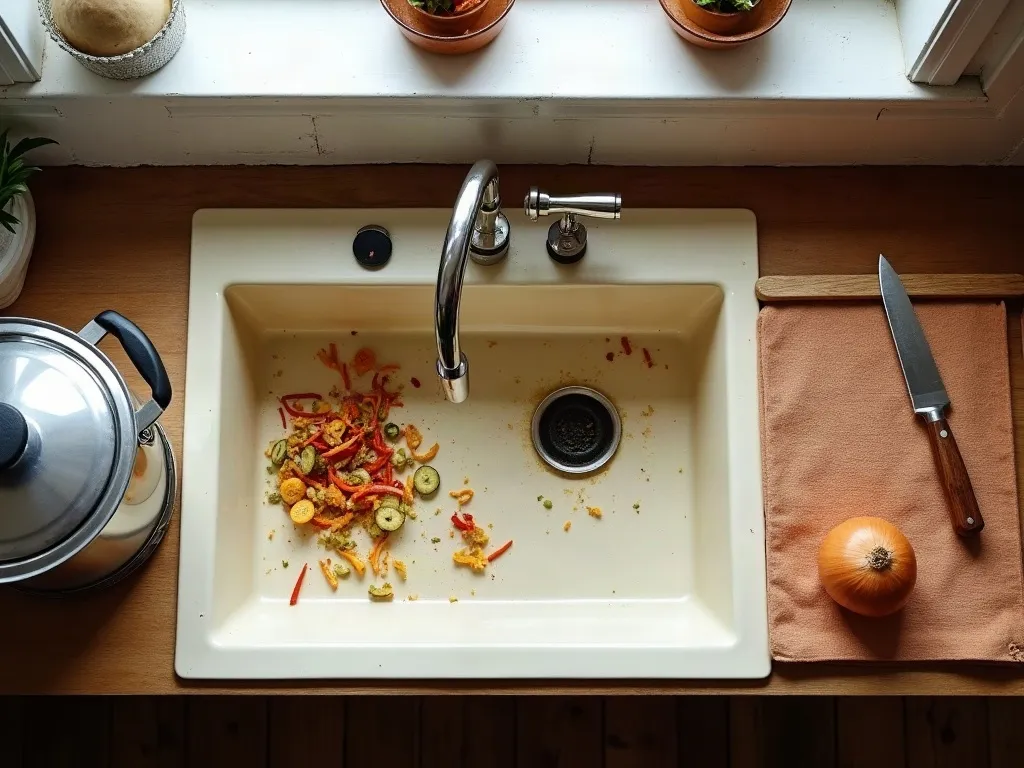
Somewhere in the first cold week of November the appliances stop being things we take out and start being residents. The slow cooker goes onto the counter on a Monday for a dinner nobody has to think about again, and on Tuesday it is still there, because it will be wanted again on Thursday. A loaf cools on a rack beside it. The stock pot, which has no other home, sits on the hob. By the second week there is one clear rectangle of counter left — roughly the size of a cutting board — and the rest of the kitchen has become a series of small negotiations.
We spend a lot of November writing about what to cook in this weather. Not much about where. But the where decides a good deal of the what, and in a kitchen with one counter it decides the order of the work too.
Space is not the problem. Sequence is.
Take the same dinner into two kitchens.
The one with a long counter can have three things out at once: the board with the onions, the bowl for the coating, the pan already on the hob. The work happens in parallel, and the steps are only nominally in order, because step four can sit on the counter and wait for step three. That is the kitchen most recipes were written in, and it is why a card can be perfectly clear and still awkward to follow in a flat.
The kitchen with one counter runs single file. Chop, tip, wipe the board, put the board away, bring out the next thing. Nothing is slower, exactly. But a step that has to wait is a step standing in the doorway, and there is no room to stand in the doorway of a kitchen this size. When people say they have no room to cook, this is usually what they mean — not the floor area, but the fact that a queue with one register is one mistake away from no queue at all.
Which is why the useful question about an unfamiliar recipe here is not how long it takes. It is whether it can be reordered. A card that says brown the meat, remove to a plate, soften the vegetables asks for a plate, a place to put the plate, and a hand to move it twice. The same dinner cooked in the pot it will finish in, meat browned in batches and set on the tray that is already out, is the same food with one less object to find room for. The pot that goes into the oven is the shape this kind of kitchen is built for, and it is not a coincidence that it is also the least demanding thing to cook.
What mise en place actually costs
Everything cut, measured and waiting in small dishes before the heat goes on is taught as a universal discipline. It is not. It is a strategy for having enough surface to lay everything out on, and it works beautifully if you have the surface.
In one counter the little bowls become the problem. Each one needs a square of counter while it is filled, another while it waits, and a wash afterwards — and the onion you chopped into a bowl is an onion you were going to tip into a pot four minutes later regardless. So the bowls mostly go, and the board becomes the only thing that is out. Cut into the pan. Measure into the pot. Wipe the board and turn it over for the next thing.
This is the real reason the pot is the native vessel of a small kitchen, and it is a different reason from the one about washing up, which is its own argument on its own day. A pot is both the working surface and the place the food lives afterwards. Nothing sits on the counter waiting to be dealt with, because there is nowhere on the counter for it to sit.
Surfaces you already own
Three, and none of them cost anything.
The sheet pan that is going into the oven anyway makes a good tray for what comes off the board — peelings, trimmings, the spoon you have finished with. It moves as a unit and takes the mess to the bin in one trip. Not a second counter, but a second pair of hands. A tray of peppers and onions going in at high heat is also, conveniently, most of dinner: the freezer fajitas are the version of that we cook most often, and they were designed for exactly this.
A board cut to sit across the rim of the sink turns the sink into counter, and since the sink is where the scraps were going anyway, the sweep is one motion instead of three. The caveat is fit: it has to sit flat on the rim and not rock. A wobbly board over a sink is worse than no board at all.
And the table in the next room, which is the largest flat surface in most small flats and already holds four people. In November it becomes the prep room for the long, quiet jobs — a bag of beans to pick over, a bunch of chard to strip, apples to peel for a tray of muffins. Sitting down changes the job. Twenty minutes at a table is work you would not have done standing at a counter, and the table does not care what time it is.
Give the residents their places
The November decision worth making once is what gets a permanent footprint. The slow cooker earns its square because it works all day without being watched. The toaster earns nothing of the kind; it works for ninety seconds and can live in a cupboard. One appliance standing out is a kitchen that cooks. Three is a kitchen where the board no longer fits, and the toaster is never the one that gets moved.
So the fruit bowl goes to the table, the mixer goes to the shelf, and the knife block goes if it is the kind that holds six knives and you use two. What you gain is not tidiness. It is the counter that does not have to be cleared at 5:40, which is a different and much better thing.
Hanging storage is the one improvement we would not rush. A rail holds utensils well and appliances badly, and a rail above the only stretch of counter puts things exactly where the board needs to go. It reads as space in a shop and behaves as an obstacle at home.
The menu follows the counter
There is a honest limit here, and it is worth naming rather than organising around. A one-counter kitchen cannot put four hot dishes on the table at seven o’clock. No amount of good habits changes that, because the constraint is not skill or planning but simultaneous heat and simultaneous surfaces.
The repair is a menu with two hot things and the rest made earlier, or served cold, or brought by somebody else — which is the same conclusion the holiday oven notes arrive at from the other direction. Recipes can be adjusted later in the month. Counter space cannot be found in an afternoon.
Most nights, though, the small kitchen is not a limitation at all. One job at a time, finished before the next one starts, sounds slower than it is. It produces dinner, and it produces a kitchen that is still usable afterwards — which is more than can be said for the version where three things are out at once and none of them are done.