
The Sink Decides What You Cook
Cleanup isn't the afterword to dinner — it quietly sets the weeknight rotation. Notes on counting vessels, soaking early, and why a recipe that ends well gets cooked again.
weeknight dinnersone-pan mealskitchen notes
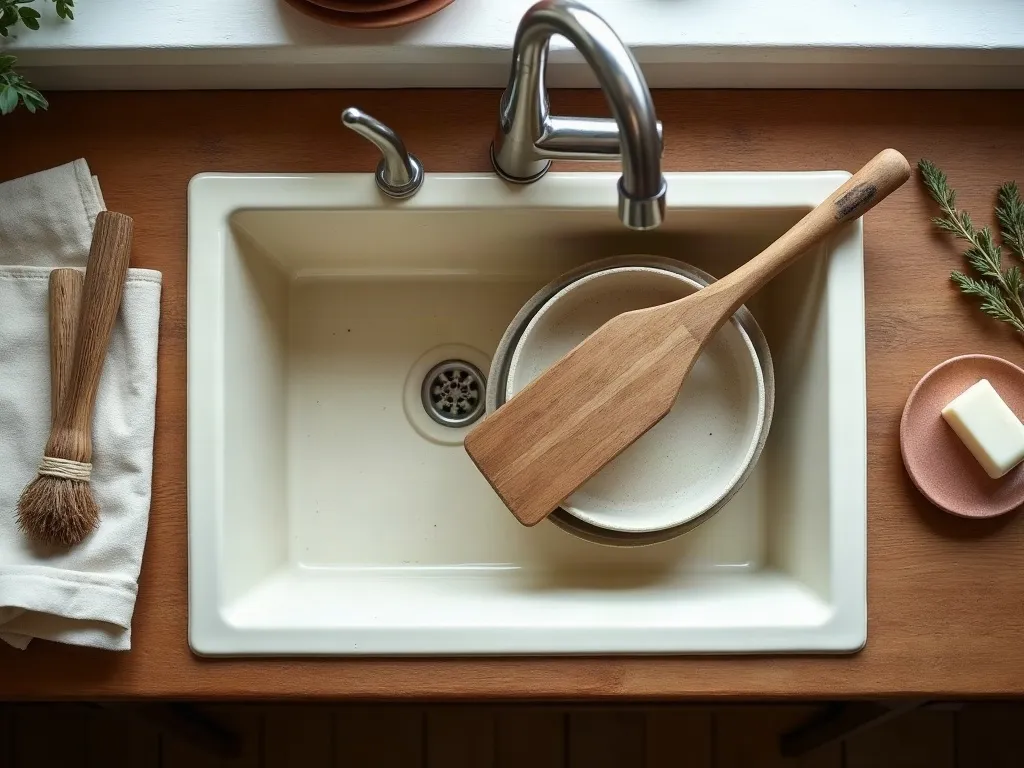
By the last week of October the window over the sink is black by six, and that changes a recipe’s arithmetic more than anyone admits. One skillet is a Tuesday. The same dinner with a saucepan for the sauce, a bowl for the coating and a tray for the oven is a Sunday, whatever day you actually cook it on.
This is the part of weeknight cooking that rarely gets written down. We talk about time — thirty minutes, start to finish — as though the clock stopped when the plates reached the table. It doesn’t. There is a second shift, and it begins the moment someone stands up.
Count the vessels
Before cooking something new on a weeknight, count what will need washing. Pans, pots, bowls, the board, the colander, the small dish the spices were measured into. Two, and you have a weeknight dinner. Five, and you have a project — one that gets cooked once, enjoyed, and quietly filed under weekends, which is where it will stay.
That count is more honest than the timing, because it includes the parts cooks stop noticing. A recipe can be genuinely fast and still leave a sink full. Nobody stands in front of the fridge at 5:40 thinking about browning; they are thinking about the pan that will need soaking afterwards. So the useful question about a new recipe is not how long it takes. It is how it ends.
The ten minutes before anyone sits down
“Clean as you go” is the standard advice, and in a kitchen with a dishwasher, a second adult and nobody hanging off a leg, it is good advice. In most kitchens it is a fiction. There is no gap between steps wide enough to wash anything, and the attempt produces half-scrubbed pans and cold food.
What survives a real evening is smaller: one habit, in the ten minutes before the table is set. The pot goes into the sink and fills with hot water while the food rests. Not scrubbed — filled. Water and a drop of soap do the work while you eat, and by the time the plates are cleared the worst of it lifts off with a cloth.
Everything else can wait. The board and the knife cannot, if that board has held raw meat; that one gets washed before anything else touches it, and it is the only piece of washing up we refuse to postpone.
Build the small number in
Some of this can be designed into the cooking instead of managed afterwards. The pot the pasta cooked in is warm and already dirty — toss the drained pasta back into it with the sauce rather than dirtying a serving bowl. A skillet that has just browned meat and needs a pan sauce is a skillet that will make the sauce. The board gets used in order, vegetables first and meat last, so it only has to be washed once. Parchment on a sheet pan means a pan that goes back into the cupboard without scrubbing, which is a small, ridiculous thing that makes an entire category of dinners repeatable.
None of it is about tidiness. It is about protecting the last hour of the day from the meal that just ended.
The rotation is made of what ends well
A weeknight rotation is not a list of the meals everyone likes best. It is the overlap between the meals everyone likes and the ones that end cleanly — whose final ten minutes do not involve a stack of pans, a greasy stovetop and a negotiation about who did it last time.
Which is why the rotation tends to narrow in late October, and why the narrowing is not the failure it looks like. Six dinners that clean up in one sink-load get cooked forty times between now and March. Twenty better ones get cooked twice each, and the second time one of them leaves a sink full at ten o’clock, it stops being a candidate for a Tuesday for good.
The pan-dinner shape is the arithmetic working in your favour: one sheet pan or one skillet, dinner and its vegetables together, one thing to soak. The archive’s chicken fajitas do the same with the freezer handling the shopping. And a pot of beans is the extreme case — one pot, an hour you were going to be in the house anyway, and a cooking liquid that becomes the next three dinners instead of going down the drain.
The honest measure of a weeknight recipe is not how it looks on the plate at seven. It is whether the kitchen is itself again by eight.