
The Step That Looks Like a Mistake
A re-test of the archive's chicken fajitas, and the fifteen minutes at the end that decide whether you get fajitas or cooked chicken with peppers beside it.
archiveweeknight dinnersfreezer mealskitchen notes
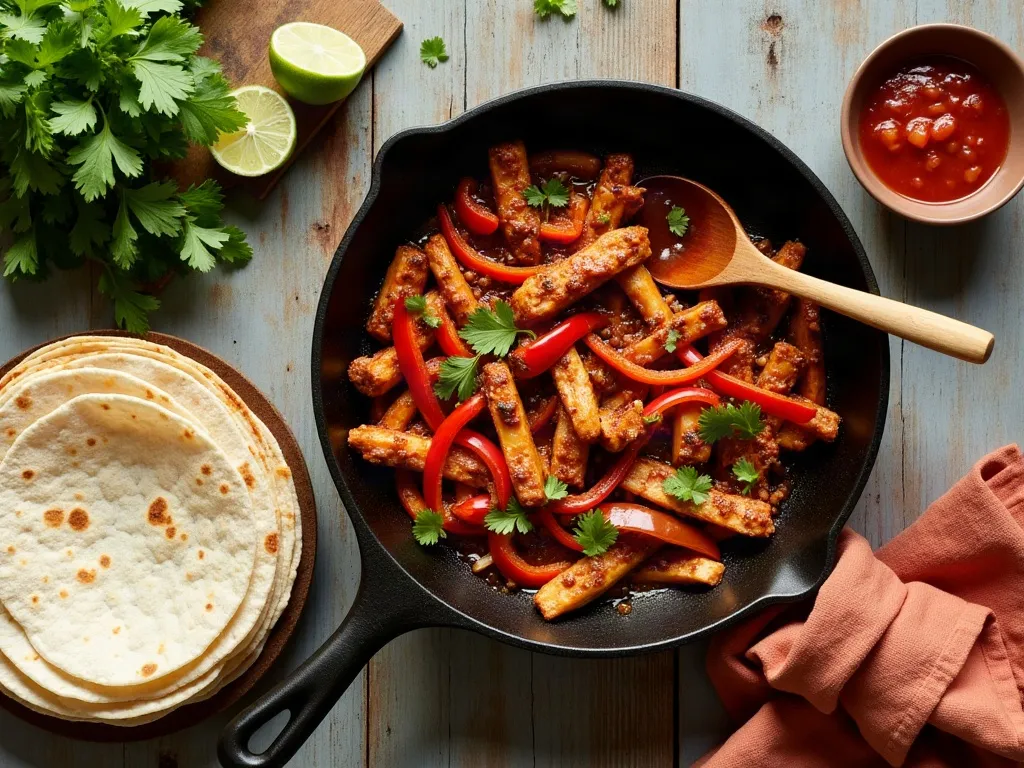
Every page in the archive gets cooked at least once with the page open on the counter, and the chicken fajitas have now had their turn. This one is short. Four chicken breasts cut into strips, two peppers, an onion, a seasoning mix that takes five minutes to stir together, half a cup of water, tortillas. Reading it through takes less time than heating the pan.
What the read does not prepare you for is the last instruction. The chicken is cooked first, eight to ten minutes in one skillet, and moved to a plate. The peppers and onion get their own seven or eight minutes in a second skillet. Then both go into one pan, the seasoning and the water go in after them, and the whole thing simmers, uncovered, for another fifteen to twenty minutes.
That is the part that makes a cook stop and reread. Everything in the pan is already done. The chicken has been cooked through, the peppers are tender and browned at the edges, and dinner could be on the table in three minutes. Instead the card asks for a quarter of an hour of quiet simmering.
The water is not there to make a sauce
The instinct is to read half a cup of water as the beginning of a sauce and then wonder why so little of it. It is closer to the opposite: the water is there to carry the spice. Three tablespoons of dry seasoning tipped straight onto hot chicken and peppers sit on the surface in patches and catch in the gaps. Given a little liquid, the same spice disperses evenly, and then the open pan does the rest of the work. A quarter of an hour at a gentle simmer takes most of that water back out again, and what is left is thick enough to hold on to a strip of chicken instead of running off it.
Which makes “uncovered” the instruction that does the work, not a detail. A lid on that pan gives you a wet braise and a puddle on the plate.
What the fifteen minutes actually look like
Minute four: thin, orange-brown, sharper in the nose than it will be on the tongue, and the chicken looks as though it is giving something up. This is the moment a cook who has not made the dish before decides the card is wrong.
Minute ten: the liquid has dropped by half and darkened. The smell has gone from dusty to round.
Minute eighteen: glossy, clinging, the colour of the spice rather than the colour of the water. Run a spoon across the pan and the gap it leaves stays open for a second before it fills back in. That is the cue the card is describing when it says the sauce thickens and clings, and it is worth waiting for rather than counting to.
Where the re-test went wrong
Two places. The first was the chicken. The card’s window is eight to ten minutes and ten is the wrong end of it, because that chicken is about to spend another fifteen minutes in a pan of sauce. Pull it at eight, while the thickest strip is only just done in the middle, and let the simmer finish it. The number the card gives for the chicken is on the page with the rest of the method, and a probe into the centre of the thickest strip is the only honest way to know where you are — browning on the outside says nothing about the middle.
The second was the pan count. Two skillets for one dinner is the kind of line a weeknight cook skips, and the first attempt skipped it: peppers and onion first, out onto a plate, chicken into the same pan. It works, and the chicken browns in the water the peppers left behind, which is to say it steams and goes pale. The card is right to ask for two pans, and the cost is real. Counted honestly this is a three-vessel dinner including the plate, which puts it on the far side of the line drawn in the cleanup notes. Worth paying once a fortnight. Not a Wednesday.
The bag in the freezer, and what the shortcut costs
The archive page is straightforward about the freezer. The cooked mixture freezes better than the raw one, and the page also offers the shortcut: raw strips tossed with seasoning and sliced vegetables, all in one bag, straight into the pan.
Both work. They are not the same dinner. The raw bag behaves like a stir-fry — the vegetables release a great deal of water as they come up to heat, so the pan starts wet and the simmer at the end has far more liquid to drive off than the card’s half cup. The sauce comes out thinner and takes longer to tighten. That is not a failure, it is arithmetic: the shortcut moves work out of the front of the recipe and into the last step, and the last step is the one that decides the dish.
The cooked version, packed flat in single-dinner portions and thawed overnight in the refrigerator, came back almost as it went in. A splash of water in the skillet, five minutes with a lid on to heat it through, lid off for the last two so the sauce can tighten again. That is a genuine fifteen-minute dinner, and it is the reason the page calls this dish freezer-worthy rather than merely freezable.
One habit worth keeping from the freezer notes: portion it as dinners, not as a block. A bag that holds two meals gets thawed for one and refrozen for nobody.
The second day
Cold fajita strips are better than they have any right to be. The spice settles overnight and the peppers stay sweet rather than turning to nothing. They go into a lunch with the tortillas wrapped separately, or over a bed of leaves with the salsa in its own small jar — the two-container arrangement argued for in the notes on a lunch that goes to work, and the reason a dressed salad is a bad traveller.
Why the step is worth trusting
A recipe that ends by asking you to cook something that is already cooked is asking for trust, and trust is expensive at half past five. What buys it back is the pan at minute eighteen: dark, glossy, smelling of cumin and char rather than of dust. The ingredients did not change in those fifteen minutes. The dish did.
The full card — the mix, the two-skillet method, the freezer note — is on the chicken fajitas page, which is where this re-test started and where it goes back to.
The dish is not difficult. It is front-loaded in an unusual direction: the decisions happen before the cooking starts — the seasoning, the cut of the strips, the second pan — and then the recipe asks you to stand still for a quarter of an hour while the sauce makes up its mind. That is an odd thing to ask of a weeknight. It is also the whole difference between fajitas and cooked chicken with peppers next to it.