
The Pantry Run, and What Belongs on the Shelf
Mid-October is a good week to treat the pantry as a system rather than a cupboard: restock what you actually finish, retire what you never cook, and let the shelf carry a weeknight when the plan does not.
grocery planningweeknight dinnerskitchen notes
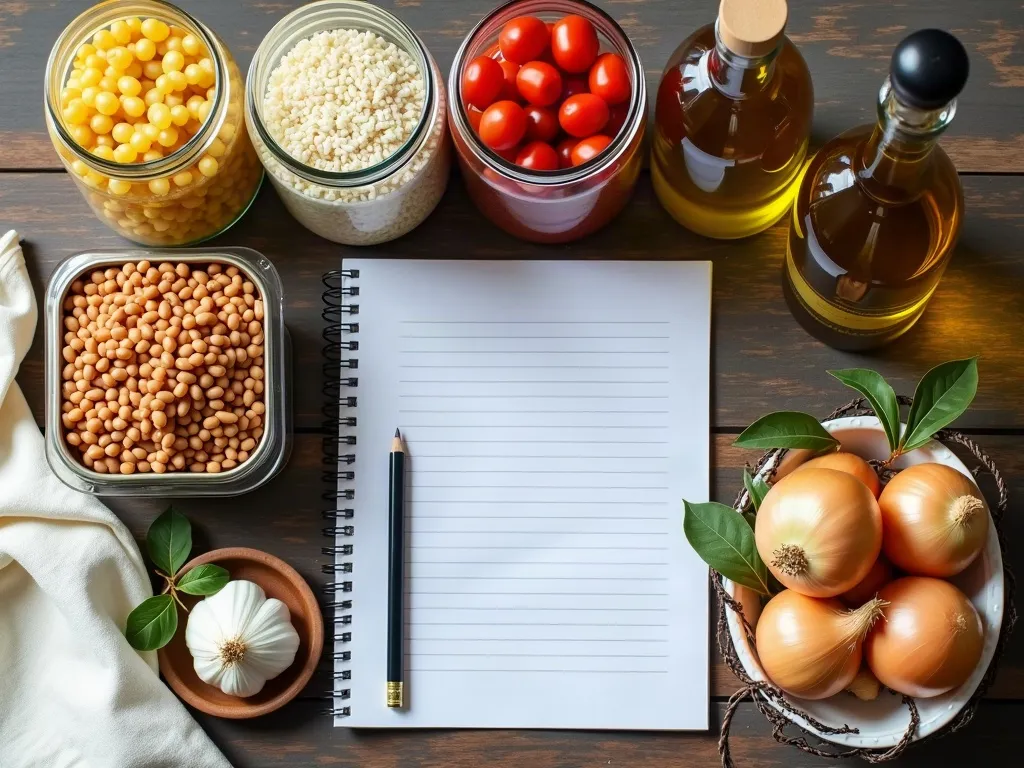
The freezer has its inventory notes and the fridge has its one crowded shelf, but the pantry sits underneath both of them, and it is usually the layer that decides what dinner can be on a night when nothing was defrosted and nobody wants to go back out. Mid-October is a useful week to walk through it. The store run is coming anyway, dinner has moved indoors, and the shelves have had a few months to be honest about what actually gets cooked.
A pantry run is an audit before it is a purchase
What keeps a pantry working is not a larger shop. It is ten minutes at the cupboard with a bin bag and a pen, before the list gets written. Open the door and sort what is in there into three piles, briskly.
Things you have finished since the last run. They become the list, and nothing else does.
Things you have two of and have not opened. They go back on the shelf and do not get replaced this trip.
Things that have been sitting since spring. Here the honest answer is usually to stop asking the pantry to pretend. The package label is the authority on the date, and if a date is not legible, out it goes. A pantry holding only food you actually eat is faster to cook from, because you can take in all of it in one look.
What earns its space
Every kitchen’s shelf is personal, but a weeknight shelf tends to converge on the same few workers.
- A fat that takes heat — olive oil, with a neutral oil beside it if you fry at higher temperatures.
- Aromatics you can chop without thinking, which in October means onions and garlic that are still firm.
- Something tinned: whole peeled tomatoes worth crushing by hand, and a can or two of beans if beans are part of how you cook.
- A starch that boils in the time it takes to deal with everything else — pasta, rice, or both.
- An acid, because a flat pan of vegetables becomes dinner with a splash of vinegar off the heat.
- Something salty and deep — parmesan rinds tucked into the freezer door, a tin of anchovies, a bottle of soy — which is what makes a pantry dinner taste intentional rather than improvised.
Everything past that list is a preference, and preferences are welcome. They just should not occupy the shelf where the workhorses live.
Restock, don’t stock
The distinction sounds fussy and is not. Buy two of what you finish between runs and one of what you do not. Buying four of a thing you use twice a year feels like thrift and becomes shelf archaeology. A pantry is a working shelf, not a bunker, and the space it saves is the space that lets you see what you have.
The list is a store list, not a recipe list
Our freezer notes already describe a running list on the freezer door; this is the same habit pointed in another direction. The pantry list hangs where the grocery list hangs, gets a line added the moment something genuinely runs out, and is written in store order rather than by recipe — all the cans together, all the dry goods together, produce last. Shopping an ordered list is what keeps a run to a single lap of the store.
When the plan collapses at 5:45
Here the pantry connects to the rest of the week. A pantry dinner is the same shape as a pan dinner, assembled from the shelf instead: fat in a wide pan, aromatics until the kitchen smells right, something tinned crushed in, a starch going alongside, then an acid and a salty finish at the end. The odds-and-ends drawer in our soup notes is the same idea applied to broth, and the archive’s slow-cooker chili — built on pantry cans and a cup or two of pureed squash — is proof that the shelf can carry a whole meal when there is nothing fresh in the house.
Component prep is what makes that possible. With the pantry stocked and one tray of vegetables and one sauce already waiting in the fridge, a collapsed plan is a short problem instead of a takeout decision.
A shelf you can read
The pantry will need this again around February, when the shelves have filled back up with good intentions. Between now and then the test is simple. Stand in front of it at the end of a long day and see whether dinner is visible. If it is, the run did its job.