
A Cupboard Full of Bases
Every container that leaves the house takes a lid with it and comes back without one. Notes on the cupboard under the counter, and the one habit that keeps it from drifting out of balance.
kitchen notesmeal prepexplainerweeknight dinners
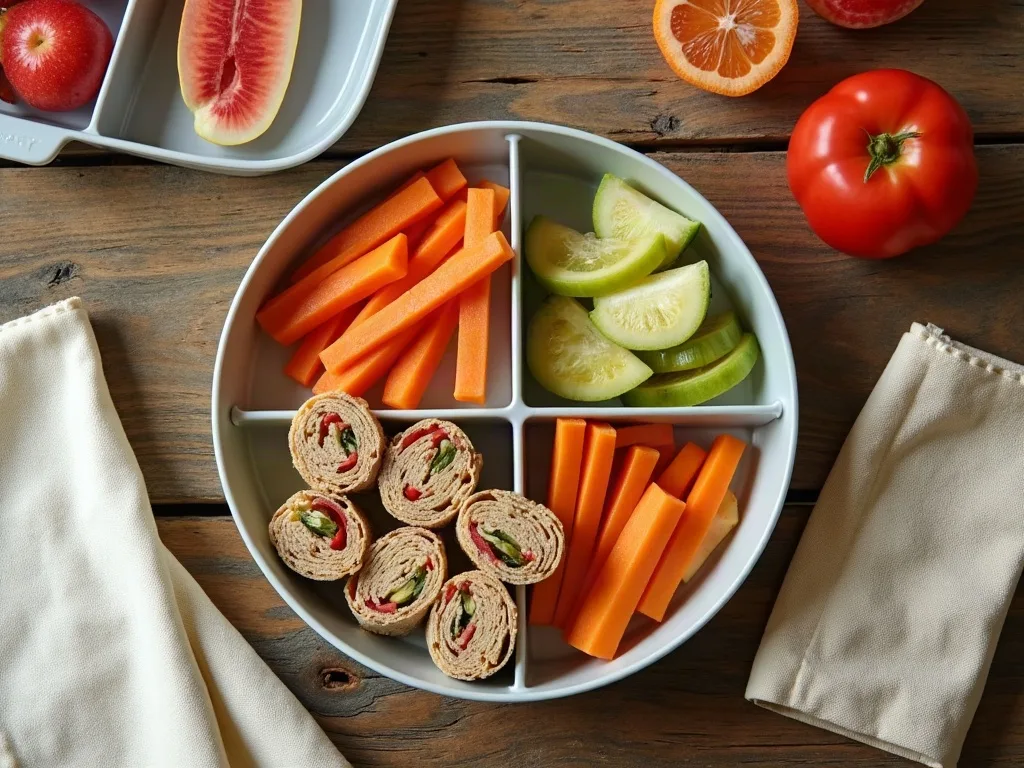
The cupboard under the counter is opened at 6:40 most evenings, and it is the only cupboard in the kitchen that gets worse the more carefully it is stacked. By the second week of November it has usually reached the state where the door has to be held with a knee while a hand goes in past a tower of bases looking for a lid. What is in there is not a mess in the ordinary sense. Everything is stacked. The problem is what has been stacked: bases, mostly, and a loose population of lids that fits almost none of them.
That is the shape of the thing. A container cupboard does not fail because it holds too much. It fails because it holds two different collections, and they are counted separately.
The two populations
A base stays in the house. It sits in the cupboard, or in the refrigerator, or on the counter with something in it, and by the end of the week it comes back to the cupboard. Its whole life is indoors.
A lid leaves. It goes out on a dish that somebody carries to work or to a table, and it comes back on Tuesday in a canvas bag, or it doesn’t come back at all, or it comes back and is set down next to the sink where it stays until it becomes the thing on the counter that nobody recognises.
Count those two collections in January and again in December and the drift is obvious. The bases accumulate. The lids evaporate. The cupboard fills up with the half of the system that cannot hold food by itself.
What the cupboard is a record of
There is a reason those bases are hard to throw out, and it is not laziness. Each one remembers a week. The quart from the deli came home with potato salad in July. The two deep rectangles were bought for a batch of something in a January that had a plan in it. The stack of thin ones with the blue lids arrived with a takeaway order on a night nobody was going to cook, and they were genuinely useful for a fortnight.
That is the trap. You are not looking at plastic. You are looking at a fairly accurate record of every week you intended to be organised, and the record is not a thing a person throws out on a Tuesday evening.
The test that works is smaller and much less sentimental: does this base have a lid in the cupboard, right now, that closes it? Not a lid that might be in the dishwasher. Not the lid from the set that came with three of them. One base, one lid, matched in the hand. Everything else in that cupboard is not a container. It is a shape.
Empty containers live closed
The habit that keeps the cupboard honest costs a second per container, and it is this: an empty container is stored with its lid on.
Not nested. Not stacked open in a tower with the lids gathered into a bag at the side. Closed, the way it would leave the house. The consequence is that a base and its lid can never be separated for long, because they are apart only while the container is in use, and a container in use is not in the cupboard waiting to be matched.
The nesting tower is what breaks this, and it breaks it invisibly. Nesting is the natural thing to do with a stack of bases: it saves half the height, it looks tidy, and it is exactly how the cupboard gets to the state where the door needs a knee. But nesting means the lids have to live somewhere else, and the somewhere else is a bag, and the bag is where matching dies. Ten bases nested, four lids loose in a bag, no way to see at a glance which four.
A closed container takes twice the shelf it took nested. That is the trade, and it is worth making, because the alternative is ninety seconds at 6:40 with the refrigerator door open, holding a base in one hand and trying lids with the other.
The annual emptying
Once a year — the second week of November is as good a week as any, since the cupboard is about to be opened twice as often as it was in September — the whole thing comes out onto the table and gets paired by hand. Not sorted. Paired. Every base is given a lid, and the pairs go back in the cupboard stacked closed.
What is left on the table when the pairing is done is a pile of bases and a pile of lids, and neither pile has a job. They leave together, in one bag, on one trip out of the kitchen. What they become elsewhere is somebody else’s decision; the only thing being decided here is that they will not be a story in this cupboard for another year.
Two exceptions are worth allowing. A base with no lid still has a use if it is going to sit in the refrigerator overnight with a plate over it, and that use is real but narrow — one or two, not nine. And the very large ones, the ones too big to leave the house, tend to keep their lids precisely because they never travel. They were never part of the drift.
A matched set is not the fix
The obvious response to a cupboard like this is to clear it out and buy one set, all the same size, all the same lid. It is a satisfying afternoon, and it works for about two months.
A set is a quantity. The problem is a behaviour. The new lids leave the house at the same rate the old ones did, because the reason they leave has nothing to do with which set they belong to — a dish goes out, a lid goes with it, and the lid is the part that gets left on somebody’s desk. By March the cupboard is a tower of unmatched set-bases with a bag of set-lids beside it, and the only difference is that now they all match each other, which somehow makes it feel more wasteful than before.
Buy the set if you want one; it is nicer to use, and the lids do stack better when they are the same. Buy it as a reward for the rule working, not in place of the rule. The rule is the part that costs nothing.
What the cupboard is for
None of this is really about storage. The cupboard under the counter is what a week of cooking passes through on its way out of the house: the portions of the archive’s chicken parmesan that go into the oven as one dish and come back out as four; the flat bags of October that get filed upright because a flat bag files and a lumpy one does not. All of it depends on there being a container with a lid at the moment the food is ready, which is never a moment when there is time to look.
Whether a lid actually seals is a different question, and it belongs to the day the dish travels rather than to the cupboard — a full container carried across a city asks more of a lid than a shelf ever will.
The cupboard asks less. It asks that when you reach in, the thing you pull out is a container, and not half of one.