
Slow Cooker Weather
October is when the slow cooker earns its counter space again — notes on the crock-pot day, the archive's squash-thickened paleo chili, and what the pot is honestly good for.
slow cookerfall cookingweeknight dinners
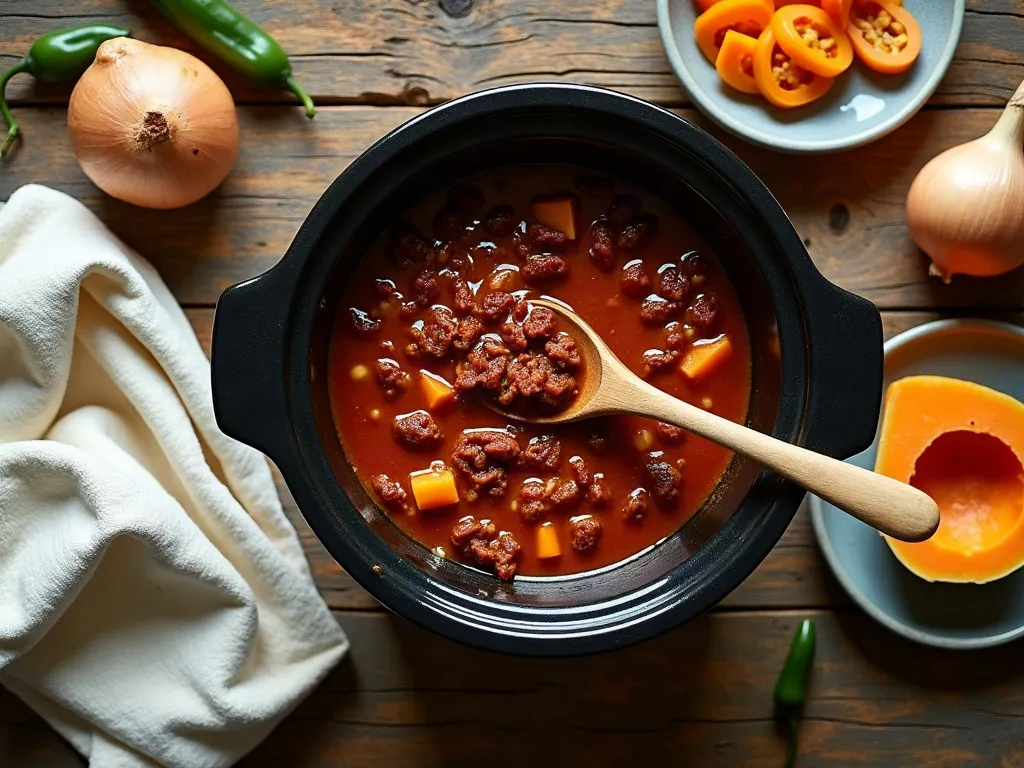
The first cold week of October does something to the dinner question. Meals that sounded right in September — something off the grill, a big cold salad, a plate of raw vegetables and hummus — suddenly read as a draft. What the season wants instead is food that has been cooking for hours and fills the house while it does.
That is the week the slow cooker comes back out. Not as a gadget so much as a different shape for the day.
Dinner decided in the morning
The real gift of a crock pot isn’t speed — nothing about it is fast. It’s that the decision gets made once, early, and then the evening has no dinner problem left to solve. On a day that runs long, dinner is simply already happening on the counter, and the only thing left at six o’clock is to taste it and set the table.
That trade, a little work before the day starts in exchange for none at the end of it, is worth more in October than any single recipe.
The archive’s case for the pot
The best argument for the slow cooker is already in the archive: a 2011 post about going primal, and the recipe tucked inside it — the slow cooker paleo chili. There are no beans and no flour in it. The body comes from a cup or two of pureed squash, butternut or acorn, stirred in near the start. The squash thickens the pot the way a roux would, and it sweetens the tomatoes just enough that nobody at the table asks what’s in it.
Brown the beef first, layer everything in, and then let it go on low for the better part of a day. It’s the sort of recipe that rewards a cook who leaves the house.
What a slow-cooker day actually looks like
A few things are worth knowing before the pot earns a permanent spot on the counter.
Everything that needs browning gets browned in a skillet first. A slow cooker cannot sear, and meat dropped in raw will taste flatter for it — the pot is for building flavour, not for making it.
Then the lid stays on. Every lift releases the heat the pot spent an hour accumulating and adds time to the far end of the day. If you want to look, look through the glass.
Salt goes in at the end, not the beginning. A long cook concentrates the liquid, and a pot that tasted right at nine in the morning will taste much saltier by six. The same is true of strong dried herbs, which soften and mellow as they steep.
And low and slow is a range, not a rule. Eight hours on low is a fine default; a thicker pot wants another hour or two on top of that, which is exactly the judgement no recipe can make for you. None of this is difficult. It’s just the difference between treating the pot as an appliance that does the cooking for you and treating it as a pot that needs a cook’s attention at both ends.
The pot rarely makes only one dinner
A full slow cooker is almost never a single meal, and that’s half its value. Chili on Sunday becomes two weekday lunches and a flat bag in the freezer. The freezer notes from earlier this fall cover how the archive’s stews and chilis reheat from frozen. And if you want the other half of the same idea — cooking a protein once and building several weeknights around it — the archive’s freezer fajitas are the same strategy worked in a skillet instead of a crock pot.
One practical note worth repeating, because a big pot of chili is easy to leave sitting: leftovers should go into the refrigerator within about two hours of cooking, and are best eaten within three or four days. That’s the standard home-food-safety guidance, and the Core Four practices lay it out plainly if you want the details. A wide, shallow container will bring a large batch down to temperature faster than one deep pot, so it’s worth splitting a big batch across two dishes.
A season of ordinary Tuesdays
By the first frost, the pot will have been out for a few weeks and the routine will feel obvious, which is the whole point. Slow cooker weather isn’t about a recipe you can’t stop thinking about. It’s about the ordinary Tuesday that got fed anyway, by a decision made hours earlier, before the day had a chance to get in the way.
Sources
- The Core Four Practices — Fight BAC!fightbac.org